
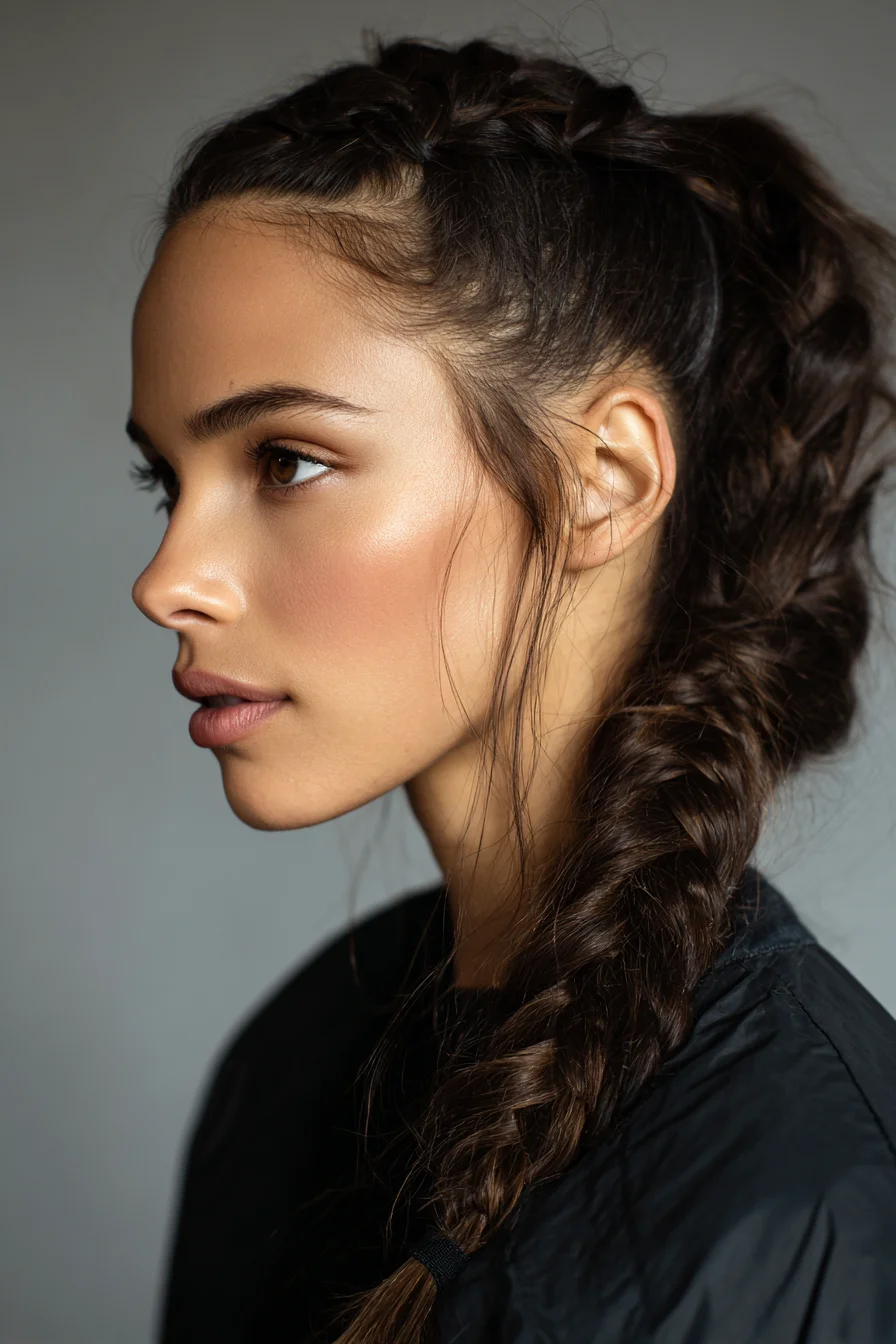
As a salon stylist with over a decade behind the chair, I’m Lena. In this gallery I share 16 two-braided ponytail hairstyles for women — variations from sleek low ponytails with twin Dutch braids to high sporty double ponytails, romantic bubble braids joined into one, and braided crown details feeding into a ponytail. These looks flatter many face shapes and work well on medium to long lengths; thin hair benefits from light texturizing or temporary extensions, while thick hair creates fuller, long-lasting braids. My styling tips: start with detangled, slightly textured hair (use salt spray or mousse), secure small clear elastics, braid firmly but not too tight, and finish with light-hold hairspray and smoothing serum on ends. The 16 images below demonstrate sectioning, braid types (Dutch, French, rope), and finish options so you can recreate salon results at home or request a precise reference on your next appointment.
Dutch Crown Braid into Voluminous Pancaked Ponytail
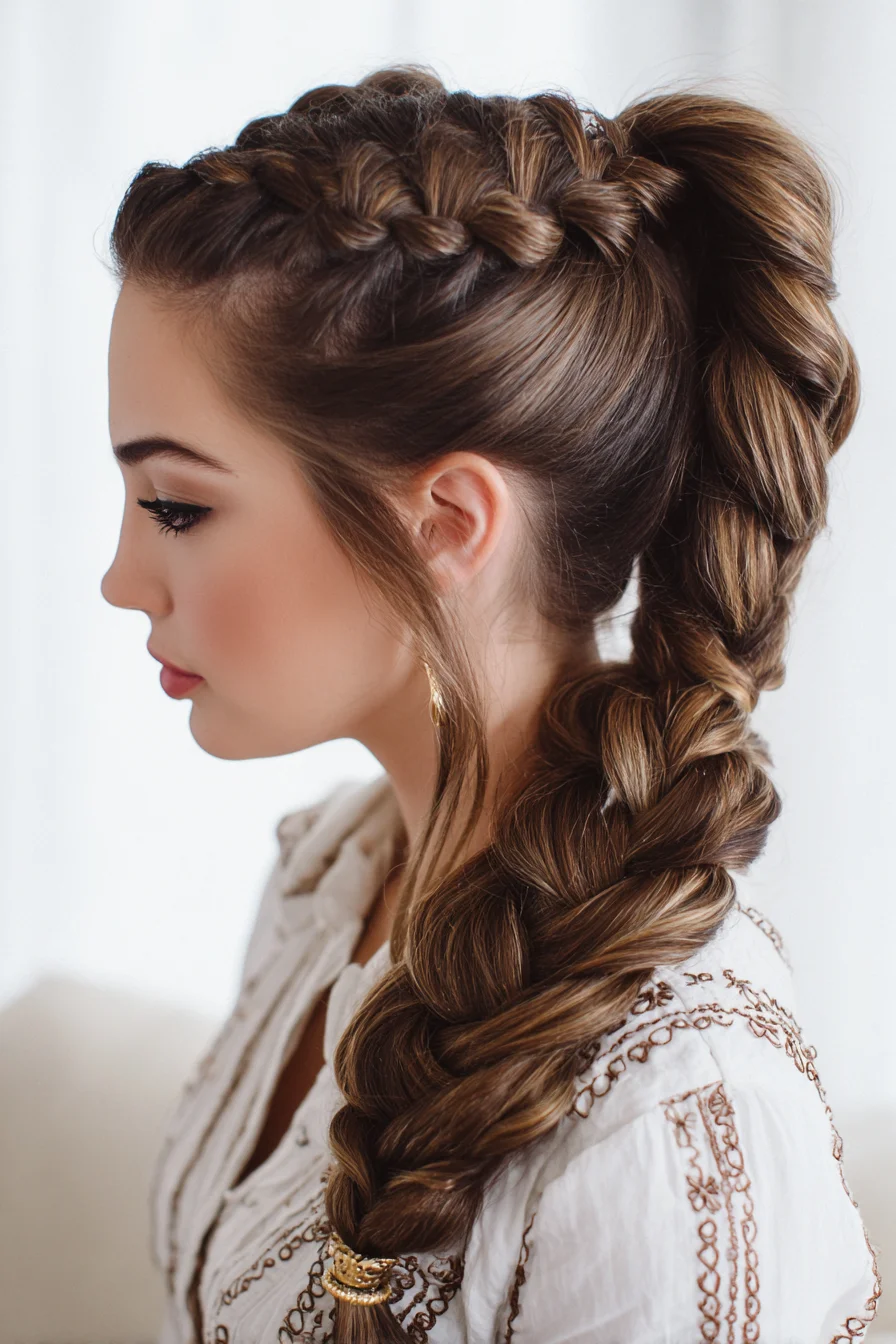
This look suits medium to very long hair and works best on medium to thick textures; fine hair benefits from clip-in extensions for body. Prep hair with a light volumizing mousse on damp hair and blow-dry with a round brush for smooth lift. Section a deep Dutch (inside-out) braid along the hairline or crown, adding hair as you go and keeping tension consistent to anchor the style into a high pony. Secure with a strong elastic, then create a three-strand braid (or a pull-through/pancake braid for extra width). Gently pancake each braid segment by pulling the outer edges to achieve the oversized, textured finish. Tools: tail comb, sectioning clips, multiple small clear elastics, bobby pins and a fine-tooth comb. Products: texturizing spray, light pomade for flyaways, flexible-hold hairspray and a smoothing serum. Difficulty: medium–advanced — requires braid control and even pancaking. Maintenance tips: sleep on a silk pillow or loose braid, refresh volume with dry shampoo at the roots, re-tighten elastics as needed and smooth flyaways with a dab of serum or pomade for a polished look.
Braided Crown into Loose Low Ponytail — Textured Boho Bridal Hairstyle
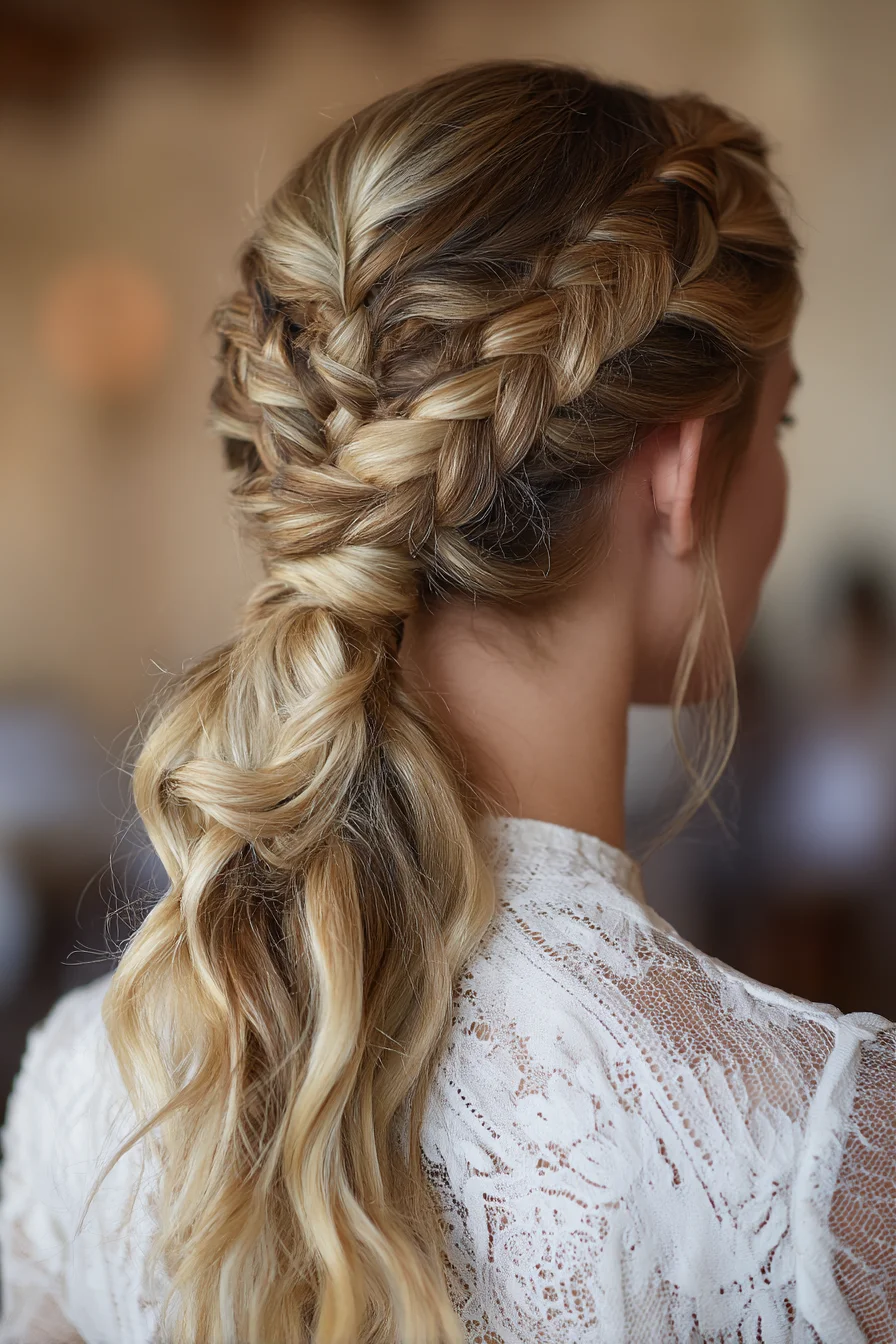
This textured braided crown flowing into a loose low ponytail suits medium to long hair and works well on straight, wavy or slightly curly textures. For fine hair, add light extensions or volumizing products; for very thick hair, plan extra pins and a stronger elastic. Technique: create two mirrored Dutch/French braids from the hairline toward the nape, join them into a low ponytail, then pancake the braids slightly for width and wrap small sections around the elastic to conceal it. Finish by releasing the ends into soft, tousled waves. Tools needed: tail comb, sectioning clips, 1–1.25 curling iron, bobby pins, elastics and a brush. Products required: heat protectant, texturizing or sea-salt spray for grip, light smoothing serum for flyaways, and medium-hold hairspray. Difficulty level: intermediate — expect 30–45 minutes in salon, 45–60 minutes DIY if you’re less practiced. Maintenance tips: sleep on a silk pillowcase or loose braid, refresh texture with dry shampoo or a mist of salt spray, and secure any loosened pieces with hidden pins before events.
Sleek Cornrowed High Pony with Chunky Double Braids — Edges Slicked
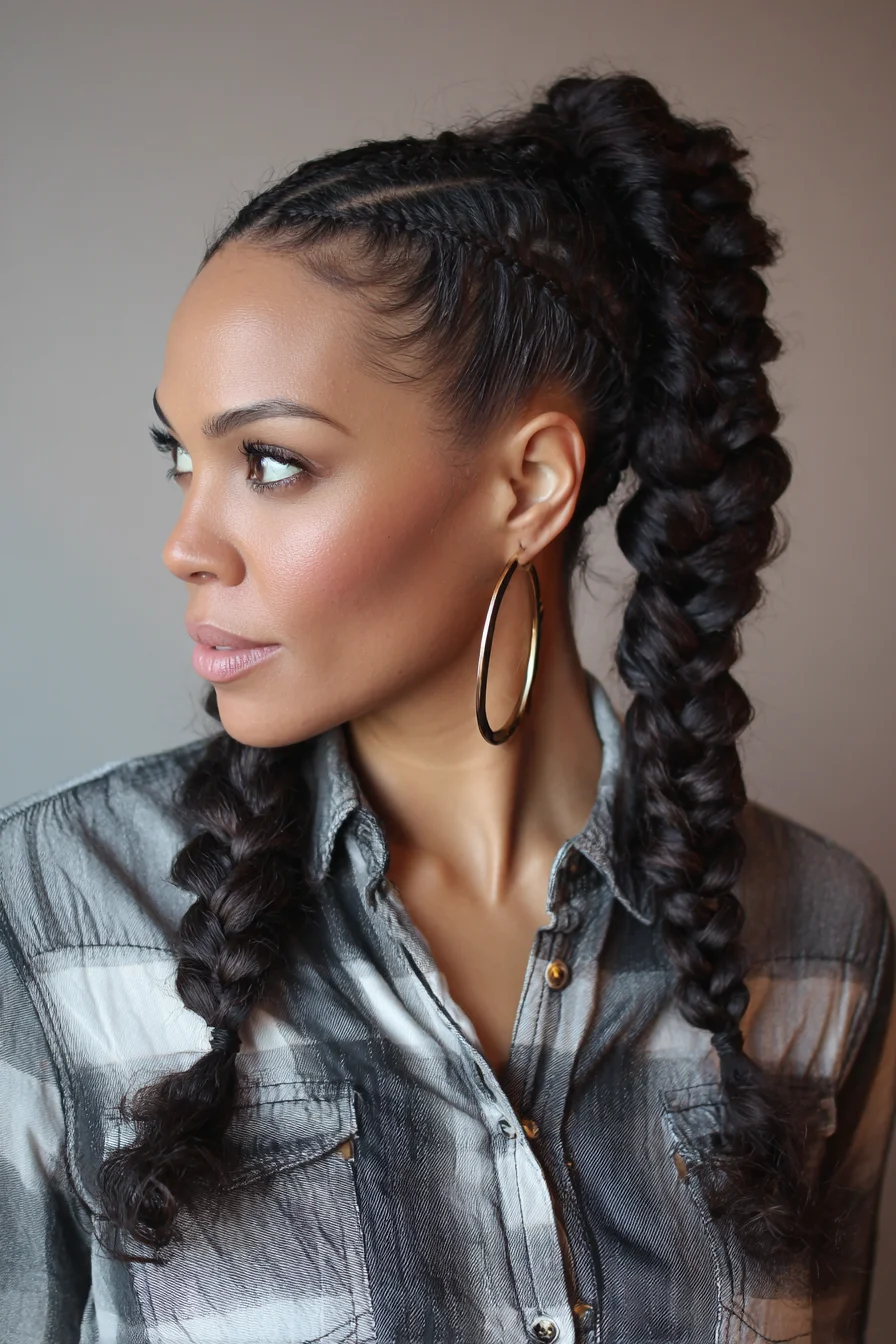
This look suits medium to thick textured hair and naturally curly or coily types best, and can be achieved on finer hair with added braid-ins or clip‑in extensions for volume. Start by parting into two sections and create tight cornrows along the scalp toward a high ponytail, then gather hair into a secure pony and braid each side into a chunky three‑strand braid. Key tools: rat‑tail comb for precision parting, sectioning clips, small snag‑free elastics, edge brush, and a paddle brush for smoothing. Helpful products: a medium‑hold styling gel or edge control to slick baby hairs, leave‑in conditioner or cream for moisture, a lightweight oil for scalp shine, and a light flexible hairspray to set flyaways. Technique tips: keep tension even while cornrowing to avoid breakage; if adding extensions, feed them in smoothly to blend. Difficulty: intermediate — requires neat parting and cornrowing skills; expect 45–90 minutes depending on hair length and extensions. Maintenance: sleep on a satin pillow or bonnet, refresh edges with a small amount of gel, moisturize the scalp twice weekly, and avoid heavy buildup; redo or remove braids after 6–8 weeks to protect hair health.
Textured Dutch Braid High Ponytail
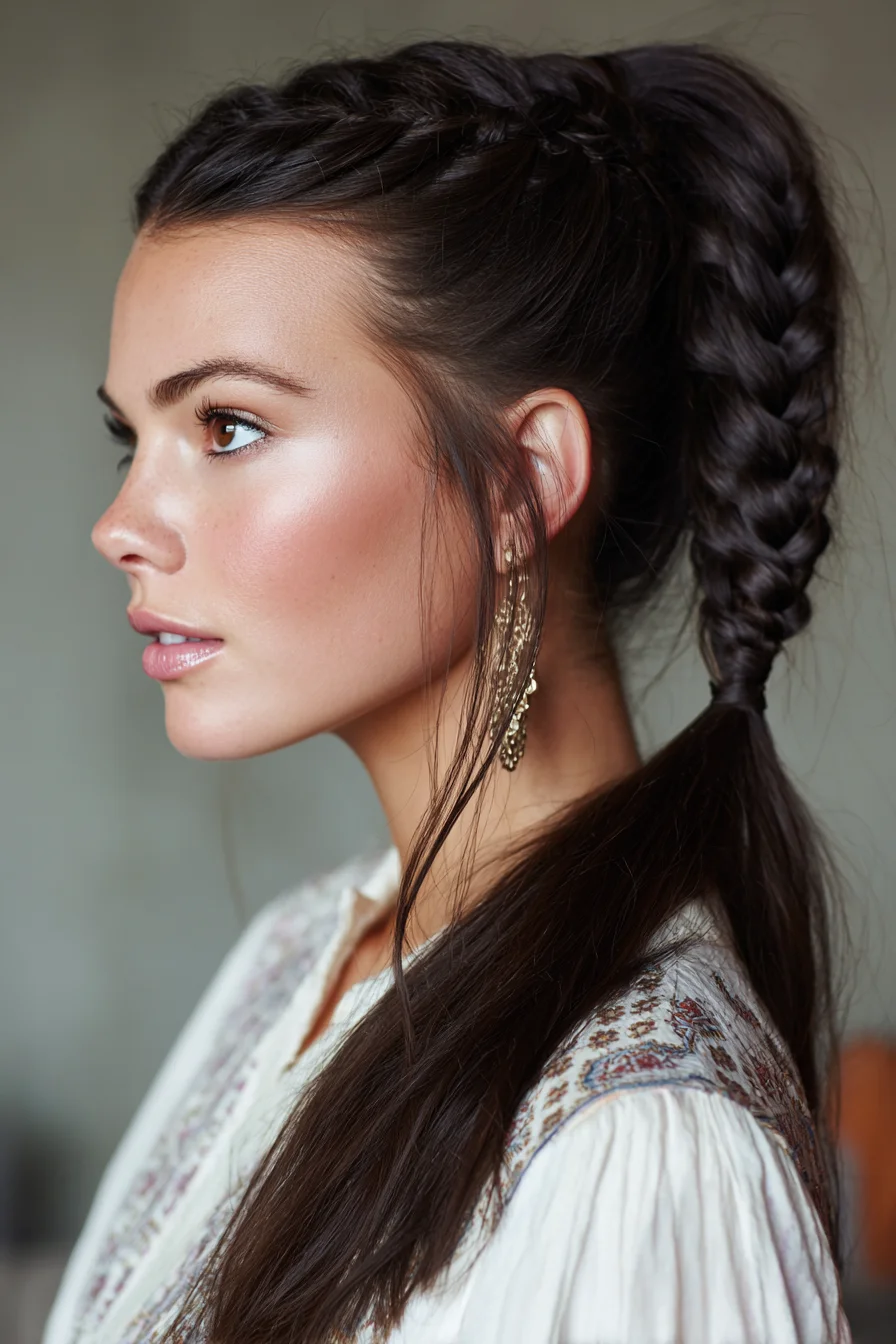
Suitable for medium to long hair, this textured Dutch braid high ponytail works best on straight to wavy textures and medium to thick density. Fine hair can achieve the same look with lightweight clip‑in extensions and a texturizing base. Technique: start on dry hair with a light texturizing spray, create a deep side or center Dutch/French braid along the crown, then gather remaining hair into a high ponytail. Continue a loose three‑strand braid or leave the tail smooth; pancake the braid for added width and gently pull face‑framing pieces free. Tools needed: tail comb, detangling brush, small clear elastics, bobby pins, sectioning clips and optional curling iron to add movement. Products required: heat protectant, salt or texture spray for grip, smoothing serum for the ends, flexible hold hairspray and dry shampoo to refresh. Difficulty: intermediate — requires basic braid control and clean sectioning. Maintenance tips: sleep on a silk pillowcase or re‑braid loosely, refresh grip with dry shampoo at the roots, tighten the elastic and repancake sections to restore volume, and smooth flyaways with a pea‑size amount of serum.
Voluminous Dutch & Fishtail Braided Ponytail with Face‑Framing Tendrils
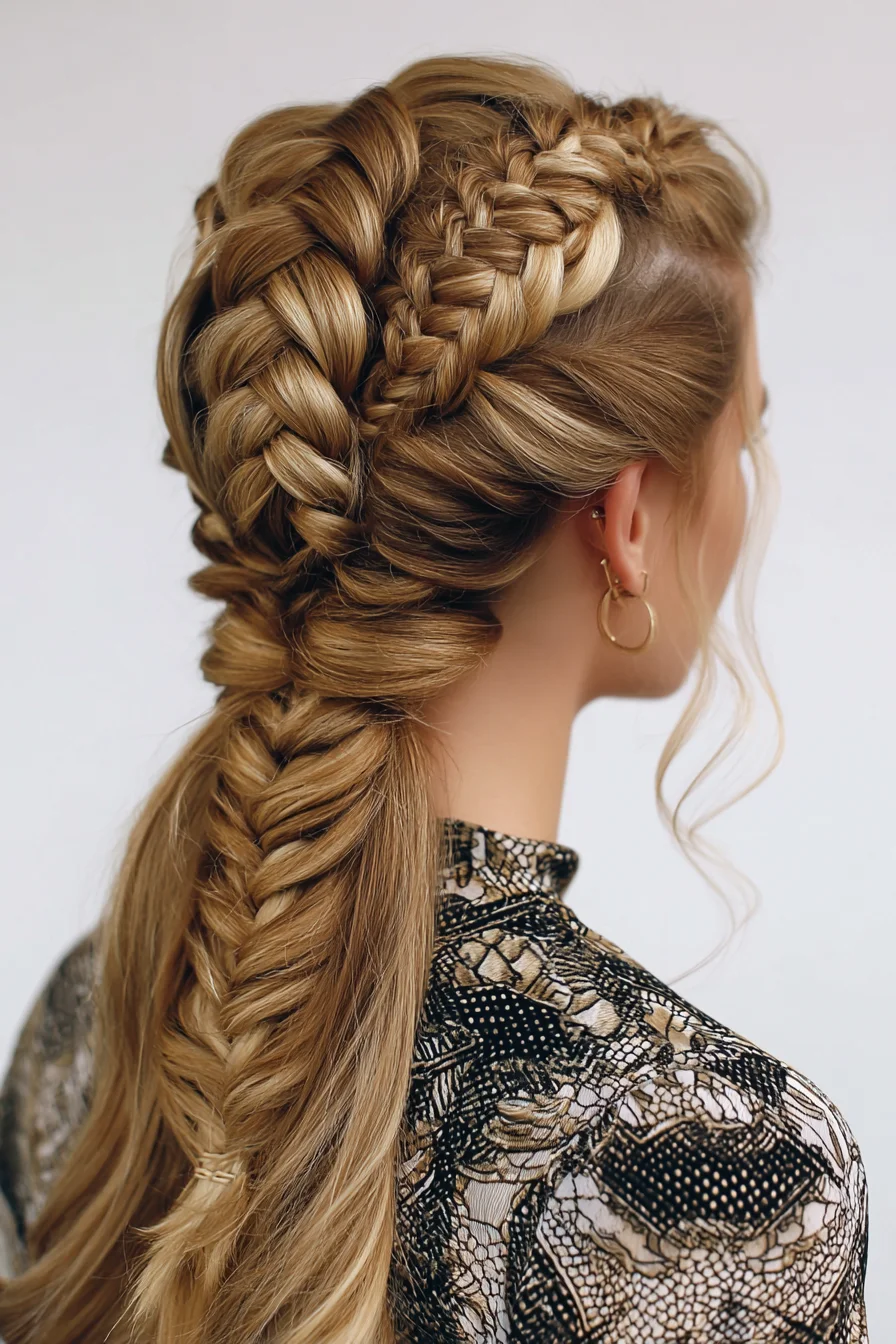
Suitable for medium to long hair, this style works best on medium to thick textures; fine hair benefits from texturizing spray or tape‑in extensions for added volume. Start by sectioning and creating two Dutch braids across the crown toward the nape, then pancake the braids to widen them. Join the braid ends and transition into a textured fishtail (or pull‑through) braid, loosening sections for a soft, voluminous finish. Tools: tail comb, sectioning clips, medium brush, small clear elastics, bobby pins, and a 1 curling iron for face‑framing strands. Products: volumizing mousse or salt spray for grip, light smoothing serum for flyaways, dry shampoo to boost hold, and a medium‑hold hairspray to set. Difficulty: advanced — requires confident braiding and about 45–75 minutes; recommended for stylists or experienced DIYers. Maintenance: sleep on a silk pillowcase or wrap hair, refresh with dry shampoo and a light mist of hairspray, re‑tighten elastics and pins as needed, and avoid heavy oils at the roots to preserve lift. For thin hair, add clip‑in pieces near the crown for instant fullness.
Textured Dutch-to-Fishtail Braided Ponytail with Face‑Framing Tendrils
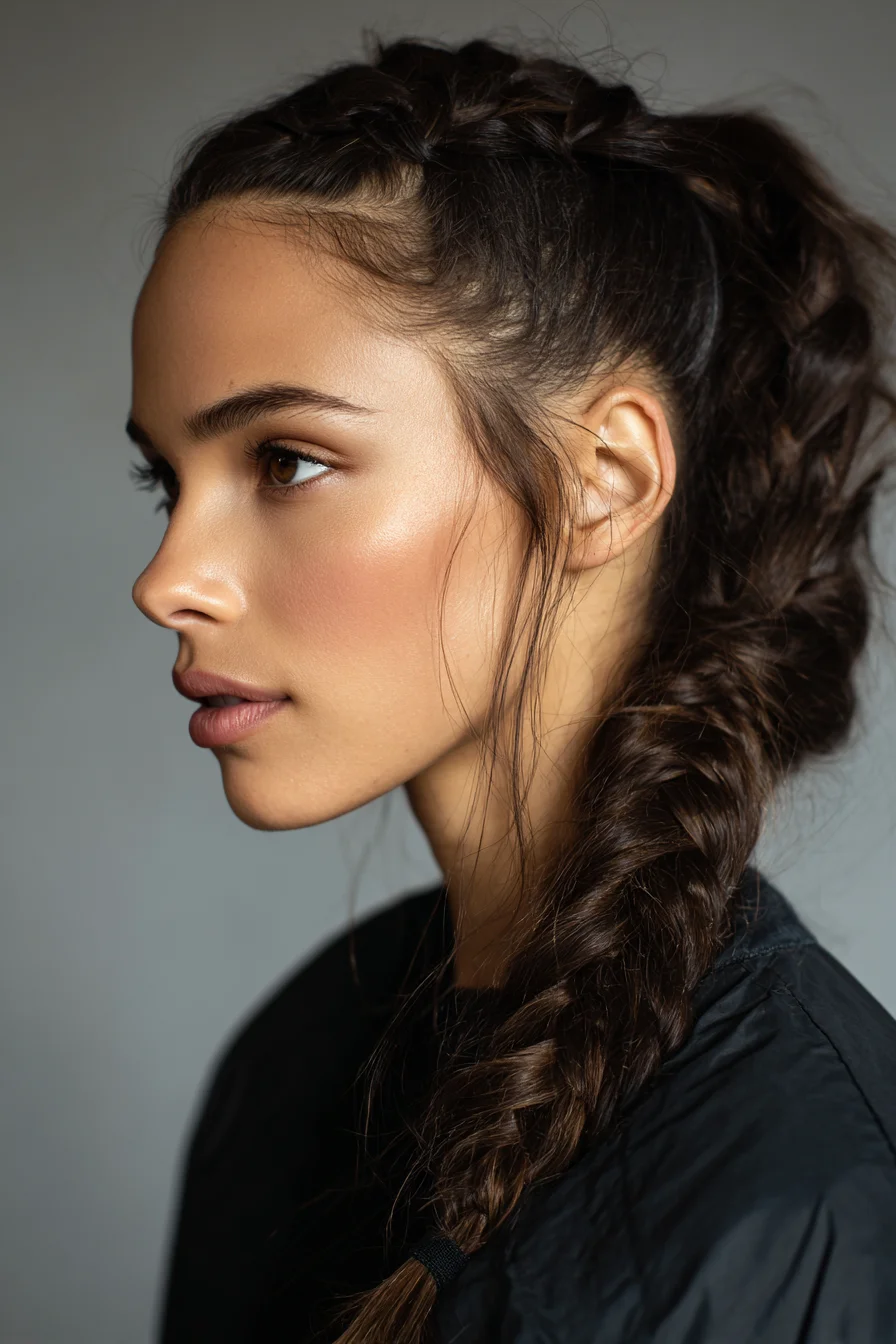
Salon-friendly and practical, this textured Dutch-to-fishtail braided ponytail works best on medium to long hair with medium to thick density; wavy hair gives the most natural texture, but straight hair can be pre-texturized with spray or a light wave. Start on dry, slightly second-day hair: apply a heat protectant if you’ll use hot tools, then a texturizing spray from roots to ends. Create two or three small Dutch (inverted) braids along the hairline, secure with elastics, gather remaining hair into a mid-high ponytail and transition the length into a loose fishtail or three-strand braid. Pancake the braid gently for width and pull a few face-framing tendrils free. Tools: tail comb, clips, small clear elastics, boar-bristle brush, and sectioning clips. Products: texturizer or dry shampoo, flexible-hold hairspray, lightweight pomade for baby hairs, and a little shine serum. Difficulty: moderate — requires basic braiding technique and sectioning patience (20–40 minutes). Maintenance: sleep on a silk pillow or wrap, refresh texture with dry shampoo, re-tighten elastics as needed, and deep-condition weekly to keep ends healthy.
Double Dutch Braids into Voluminous Textured Ponytails
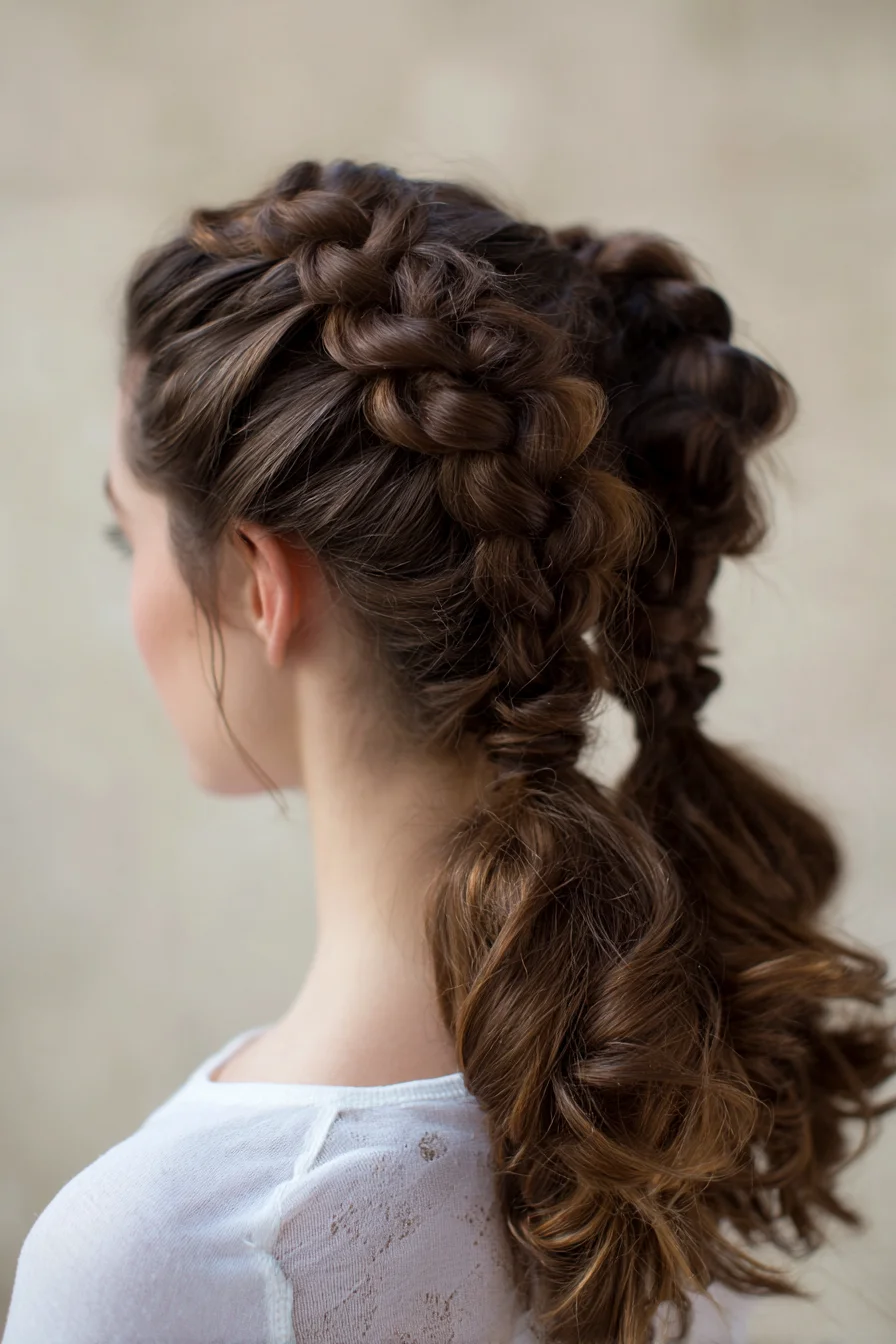
This look pairs two Dutch (reverse French) braids along the crown that feed into voluminous, textured ponytails — ideal for medium to long hair. Best on medium to thick textures; fine hair works with a volumizing mousse, dry shampoo or clip-in extensions for fullness. Start on dry, pre-textured hair: section and create two tight Dutch braids from the hairline to the nape, secure with small elastics, then “pancake” each braid (gently pull outer loops) to widen and soften. Gather the remaining lengths into low ponytails, backcomb lightly at the base for lift and finish with soft waves using a 1–1.25” curling wand for movement. Tools: rat-tail comb, sectioning clips, small clear elastics, bobby pins, teasing brush, curling iron. Products: heat protectant, light-hold styling mousse or texturizing spray, dry shampoo for grip, smoothing serum for ends, flexible-hold hairspray. Difficulty: intermediate — requires comfortable braiding and shaping. Maintenance: sleep on a silk pillow or loosely wrap with a silk scarf, refresh texture with dry shampoo or mist, re-pancake braids to restore fullness and replace elastics after 2–3 days to keep shape.
Textured Dutch Braid into Low Ponytail with Loose Waves
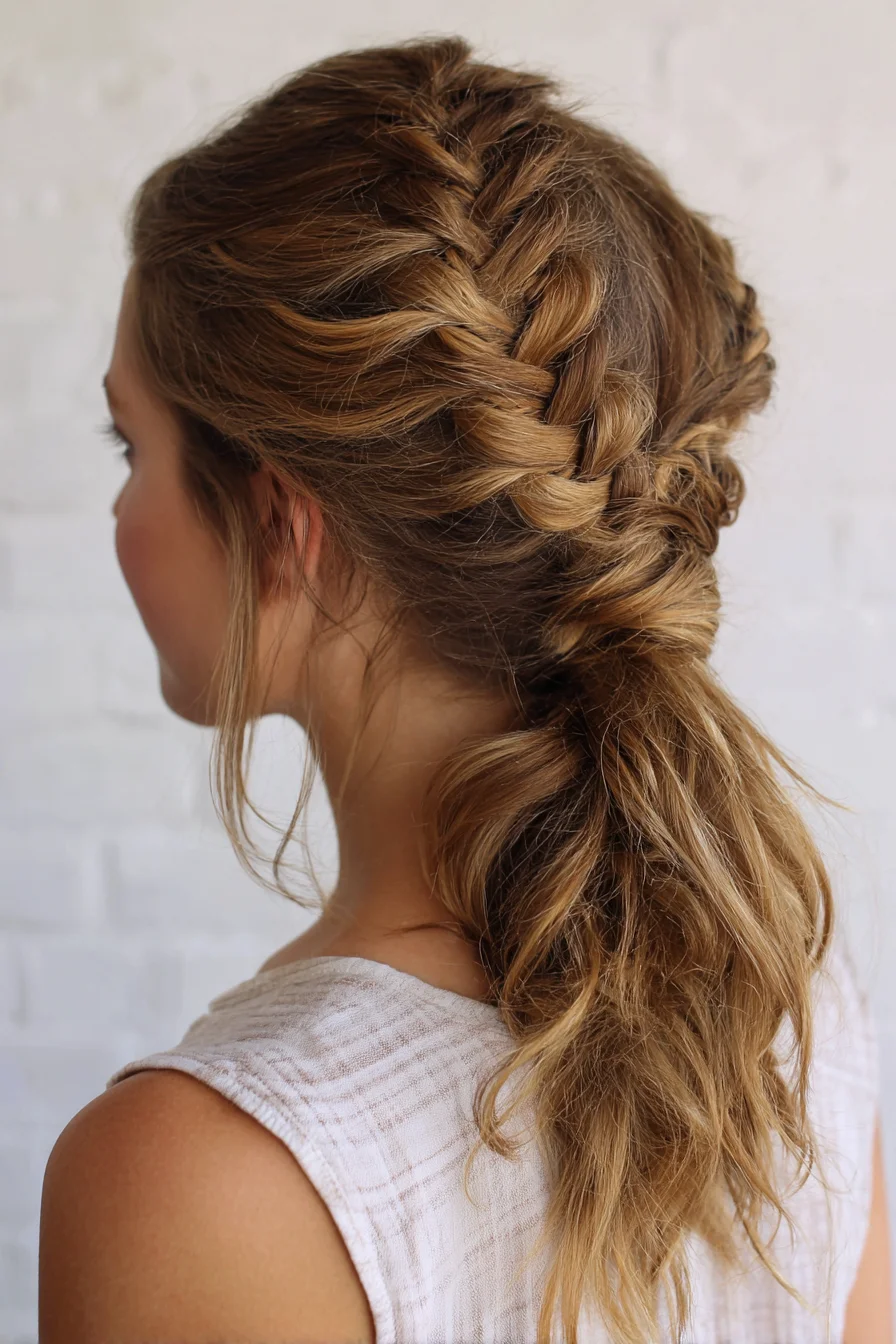
This look combines a Dutch (inside-out) braid along the crown that feeds into a textured low ponytail — ideal for medium to long hair with natural wave or added texture. For straight or fine hair, add volume with a texturizing spray or light mousse before styling; thick or curly hair only needs smoothing and control. Technique: prep with heat protectant and a sea-salt or texturizing spray, section the top and create a Dutch braid from the hairline to the nape, pancake the braid for width, then gather all hair into a low pony. Wrap a small section around the elastic and loosen face‑framing pieces for softness. Tools: tail comb, sectioning clips, elastic bands, bobby pins, 1
Sleek High Pony with Double Fishtail Braids
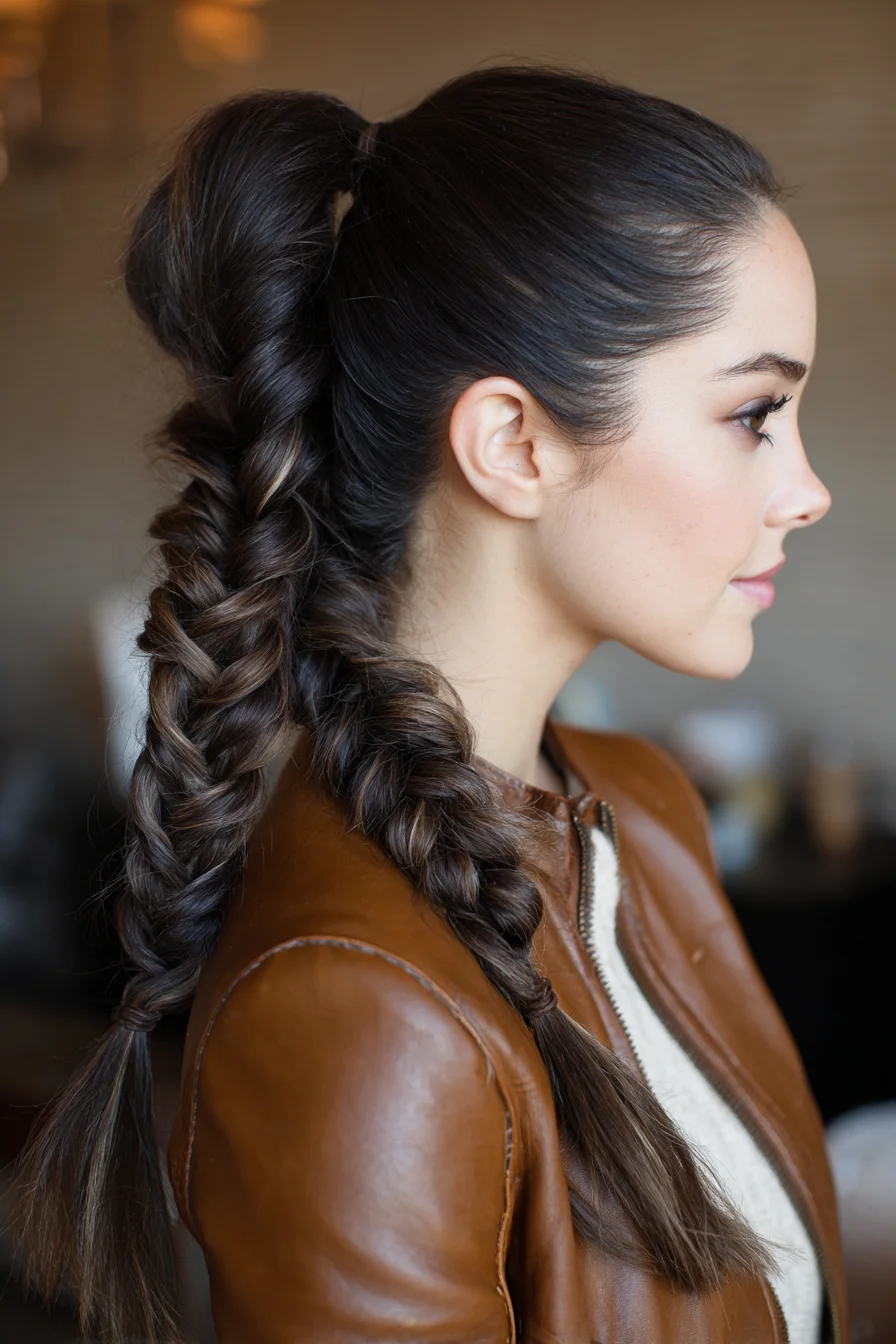
Suitable hair: Works best on medium to long lengths and medium-to-thick hair; fine hair will benefit from added texture or light volumizing; very curly hair should be smoothed first for the sleek crown. Styling technique: Smooth hair into a high, secure pony using a soft brush, then split the ponytail into two equal sections and create two tight fishtail braids from root to tip. Pancake the braids gently to widen and add fullness, then anchor with small clear elastics. Tools needed: paddle brush, fine-tooth tail comb, small clear elastics, bobby pins, and optionally a flat iron or blow-dryer for smoothing. Products required: heat protectant (if using hot tools), lightweight smoothing serum, texturizing spray or dry shampoo for grip (fine hair), and a medium-hold hairspray to set. Difficulty level: Intermediate — requires steady hands to fishtail braid neatly and to keep a smooth pony. Maintenance tips: Refresh with dry shampoo at the roots, tame flyaways with a dab of serum or paste, re-tighten elastics as needed, and sleep in a silk scarf to preserve shape; trim ends regularly to avoid fraying.
Loose Textured Pull-Through Bubble Braid Ponytail
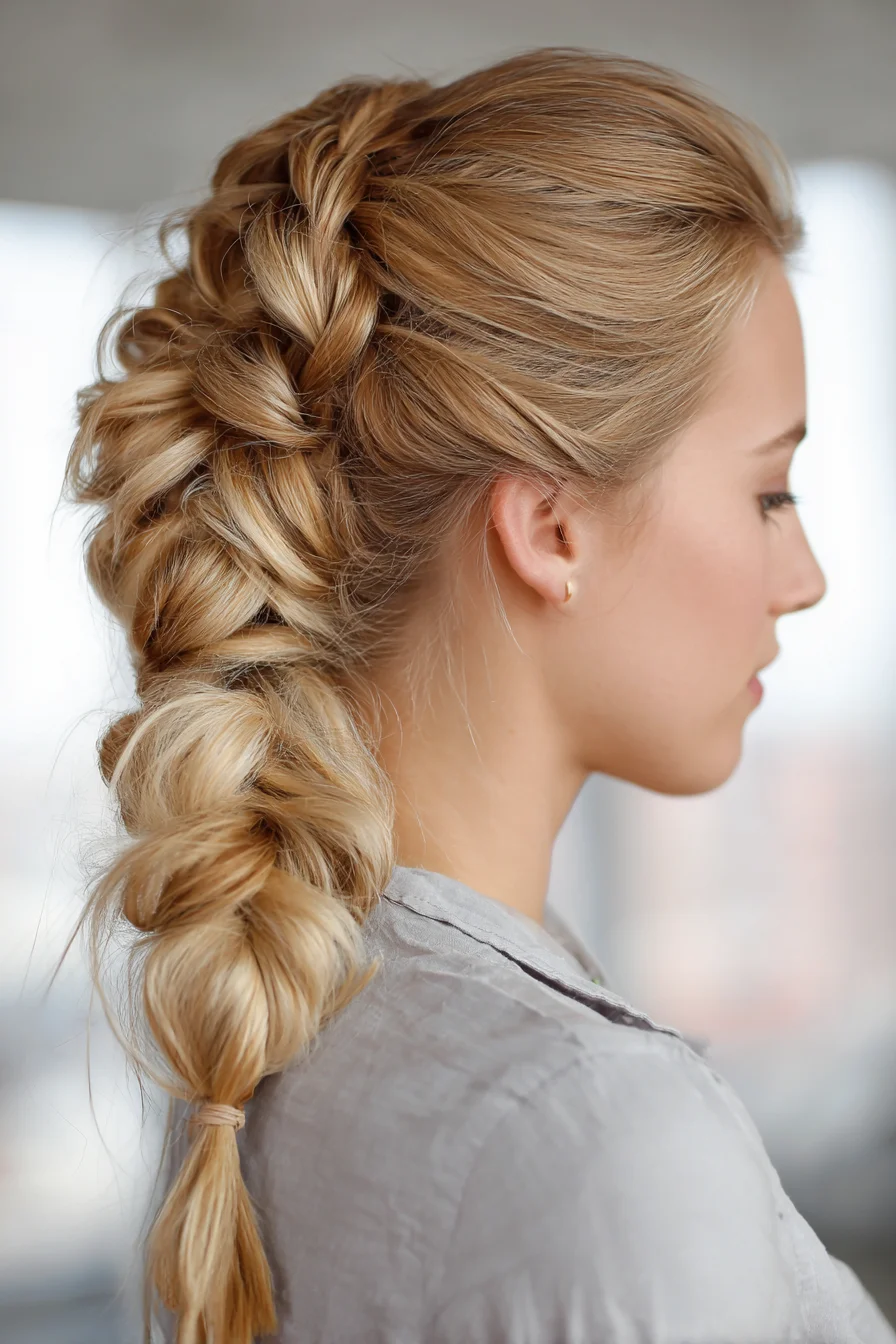
Suitable for medium-to-thick, long hair; can be adapted for fine hair with clip-ins. Start with clean, towel-dried hair and apply light mousse or texturizing spray to add grip. Create a deep side part and begin a loose Dutch/French braid from the crown, feeding sections down and converting to a pull-through/bubble braid by securing successive ponytails with small elastics and gently pulling/pancaking each section to build volume. For extra shape, curl ends beforehand. Tools: paddle brush, tail comb, multiple clear elastics, bobby pins, small sectioning clips, optional 1–1.25-inch curling iron. Products: texturizing spray or dry shampoo, light-hold mousse, anti-frizz serum, flexible-hold hairspray. Difficulty: intermediate — requires practice to keep sections even; expect 25–40 minutes in salon or at home. Maintenance: sleep on a silk pillowcase or wrap with a soft scarf to reduce frizz, refresh texture with dry shampoo, retighten elastics if loosening, and smooth flyaways with a light serum. For fine hair, add clip-in pieces at the nape for fuller bubbles.
Voluminous Dutch Braid Ponytail — Textured Braid for Medium to Long Hair
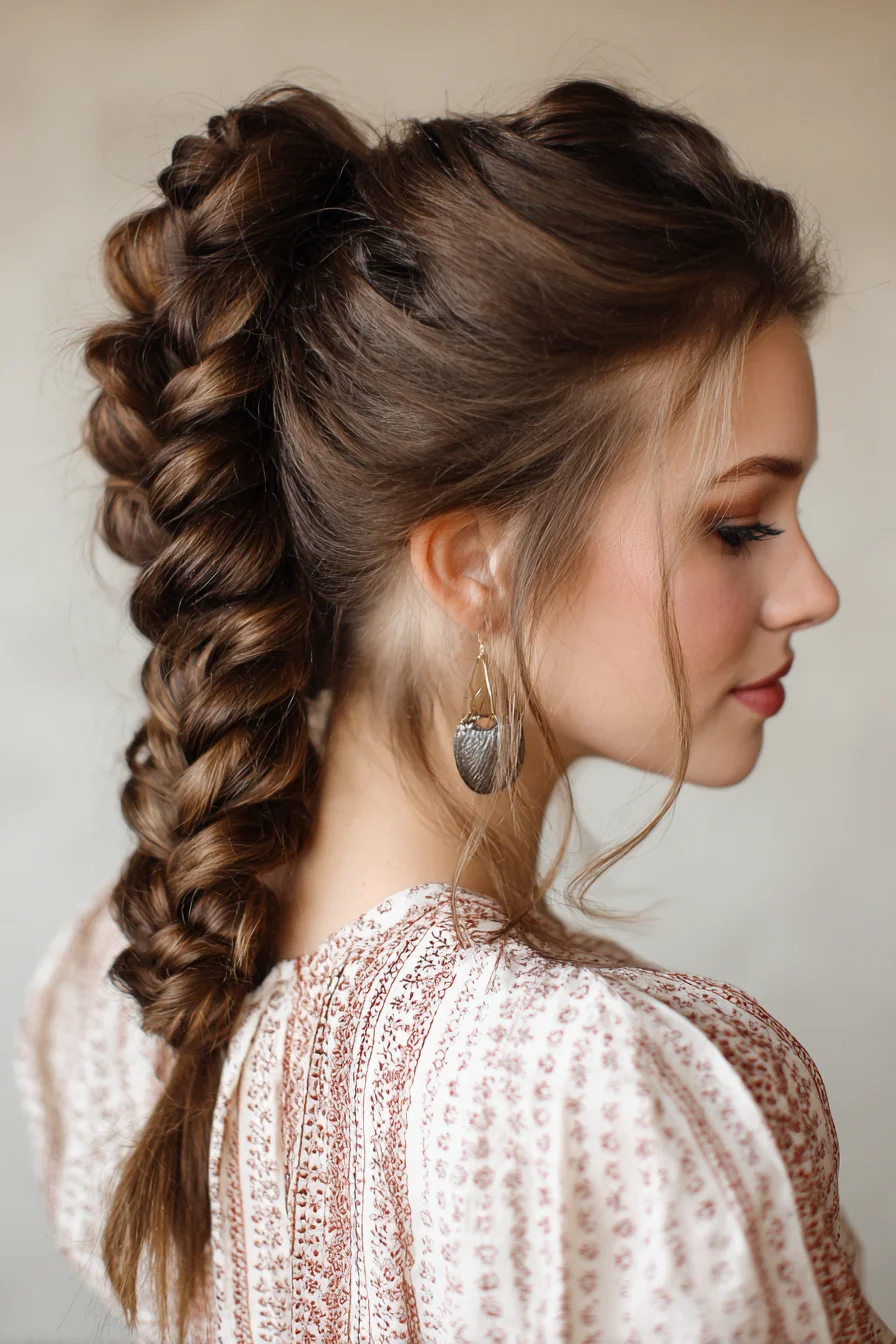
This voluminous Dutch braid ponytail suits medium to long hair and works best on straight to wavy textures; thick hair gives the fullest result, while fine hair benefits from light teasing or clip-in pieces for body. Start on clean, towel-dried hair: apply a lightweight mousse at roots and a texturizing spray through the lengths, then blow-dry with a round brush for lift. Section the crown and begin a Dutch (inside-out) braid incorporating hair down the back to the nape, secure with an elastic, then pancake (gently pull apart) each braid section to create width and softness. Finish by wrapping the tail with a small section of hair to hide the elastic and pinning it discreetly. Tools: tail comb, paddle brush, elastics, bobby pins, sectioning clips, and an optional 1
Textured Braided Bubble Ponytail — Voluminous Dutch Braid to Low Pony
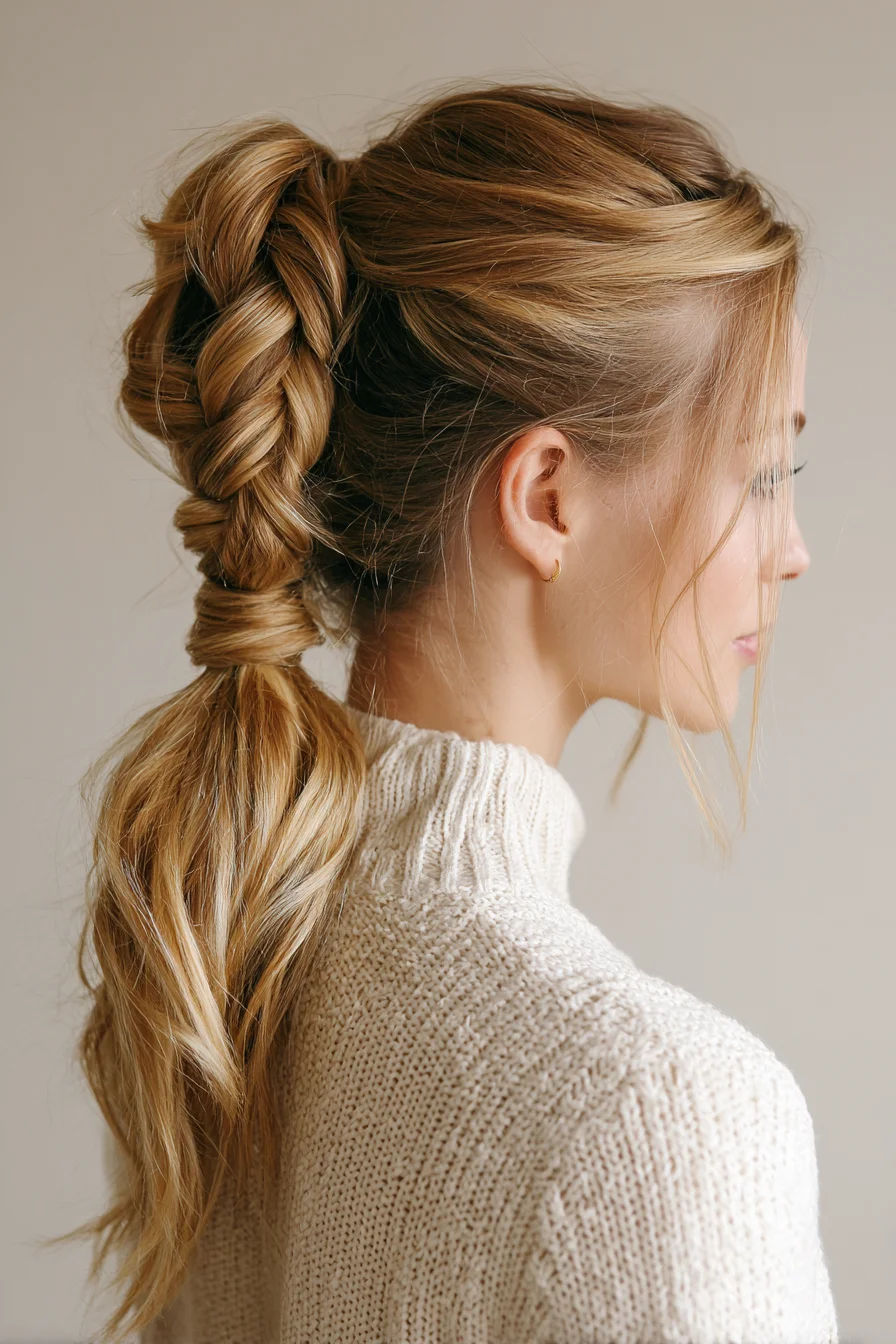
Suitable hair: Best for medium to long lengths and works well on straight to wavy textures. Fine hair benefits from light teasing or clip‑in pieces for fullness; thick hair holds shape nicely with a stronger hold product. Styling technique: Prep hair with a texturizing spray and rough‑dry for grip. Create an inverted (Dutch) three‑strand braid from the crown down to the mid‑nape, pancake the braid by gently pulling each loop to widen it, then secure into a low ponytail. Add 1–2 small elastics down the tail and softly pull sections to form the ‘bubble’ effect, finishing by wrapping a thin section of hair around the base to conceal the elastic and pinning it under. Tools needed: tail comb, paddle brush, small clear elastics, bobby pins, sectioning clips, and optional curling wand for soft ends. Products required: texturizing spray or dry shampoo, lightweight hairspray, heat protectant, and a smoothing serum for flyaways. Difficulty level: Intermediate — expect 20–30 minutes. Maintenance tips: Sleep on a silk pillowcase or loosely braid, refresh with dry shampoo and a light mist of hairspray, and re‑tighten elastics as needed to keep shape.
Side Dutch Braid into Textured Low Ponytail — Romantic Boho Look
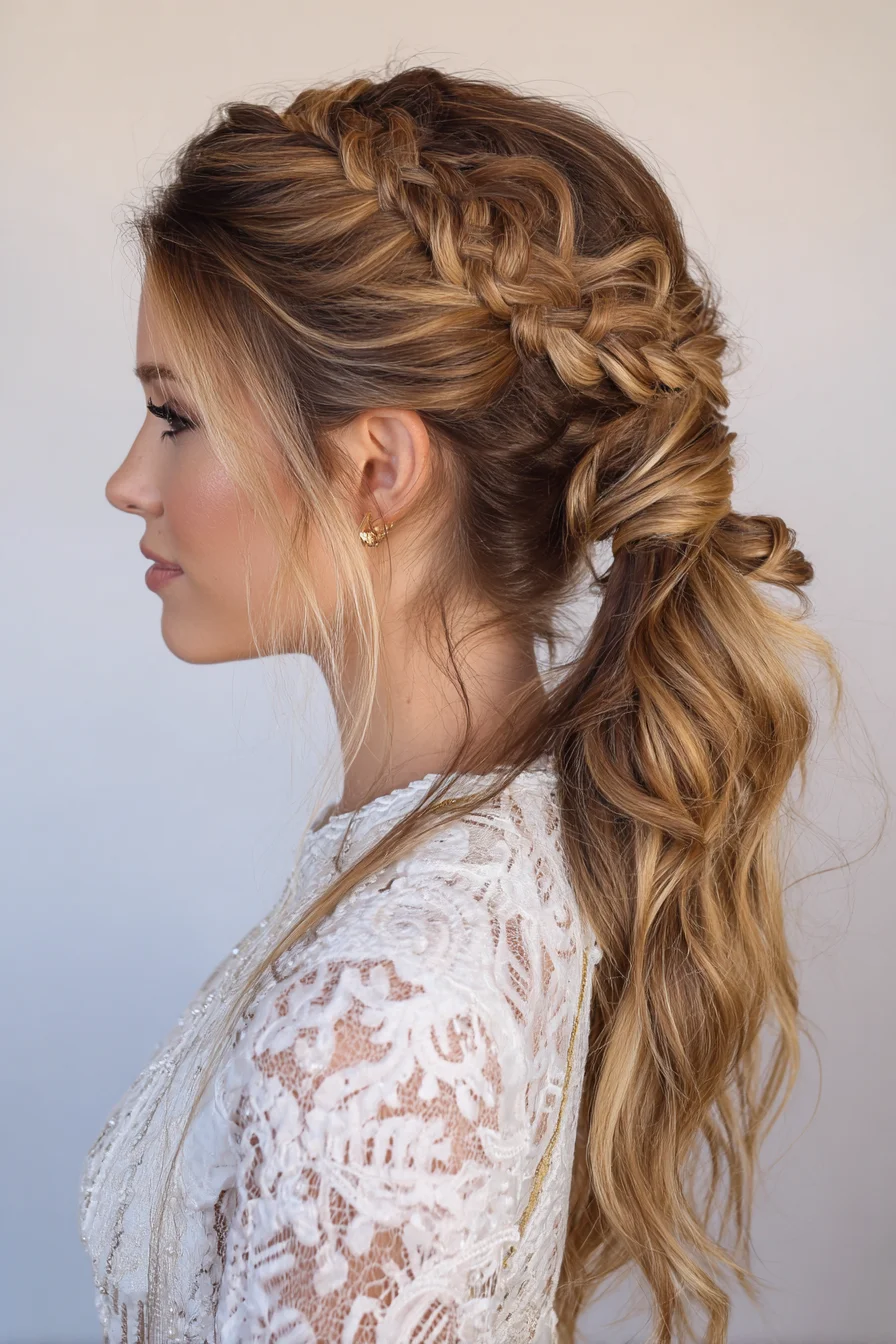
This side Dutch braid swept into a textured low ponytail works best on medium to thick, medium‑to‑long hair and is ideal for natural waves or straight hair that’s been pre‑textured. Start with a deep side Dutch/French braid at the hairline, adding sections toward the crown and gently pancake each pass to create width and softness. Secure the braid at the nape, gather remaining hair into a low or low‑mid pony, wrap a small section around the elastic and pin. Finish by curling loose lengths with a 1–1.25” iron and finger‑combing for a relaxed, boho finish. Tools needed: tail comb, sectioning clips, elastics, bobby pins, curling iron. Products required: heat protectant, sea‑salt or texturizing spray, light smoothing serum, medium‑hold hairspray. Difficulty level: intermediate — expect 25–40 minutes depending on experience; quicker with clip‑in extensions. Maintenance tips: revive texture with dry shampoo or texturizing spray, retouch waves and re‑pancake the braid to restore volume, pin any flyaways, avoid heavy oils at the roots, and sleep on a silk pillowcase to preserve shape.
Textured Double Dutch Braids with Face‑Framing Strands
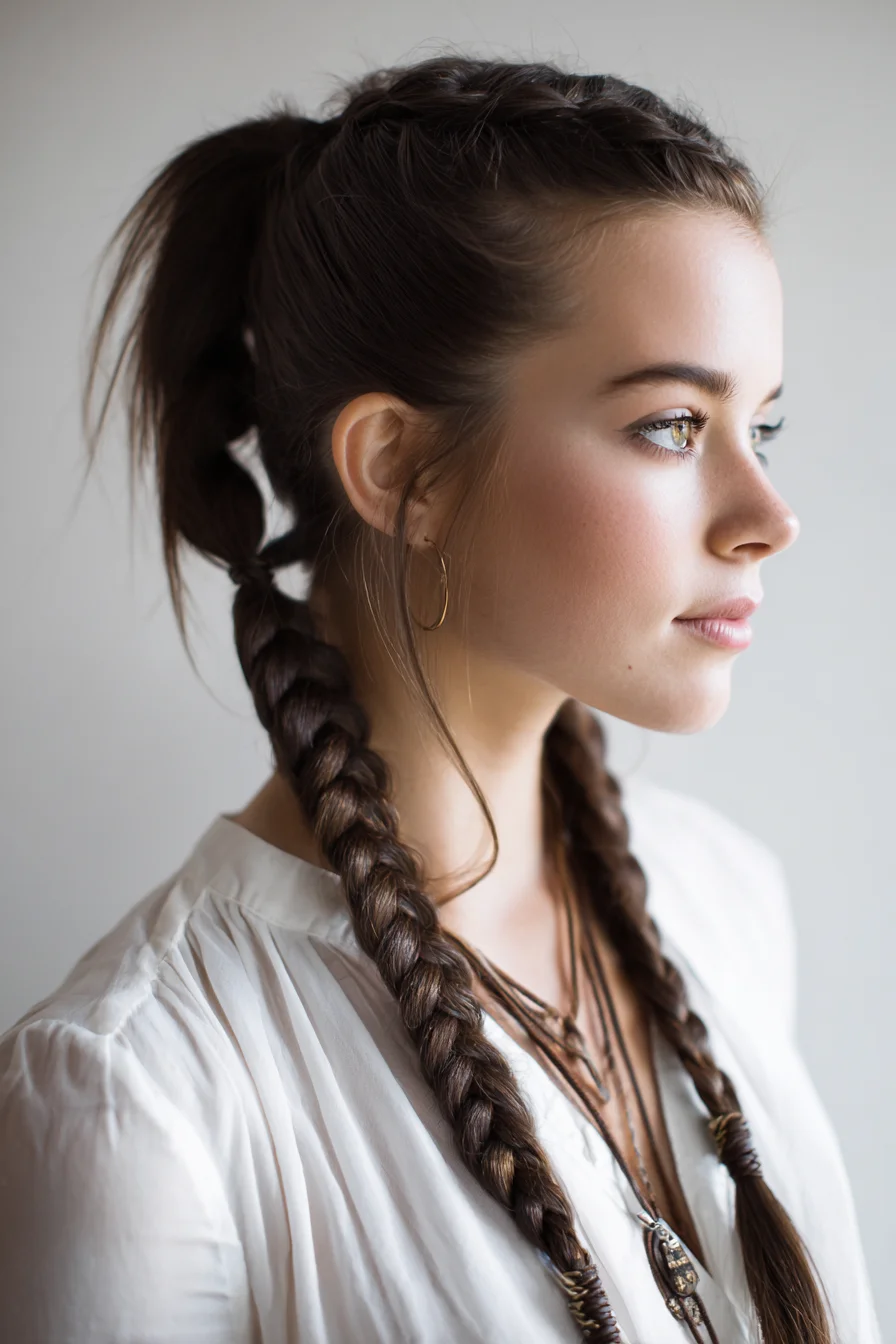
This style suits medium to thick hair and straight-to-wavy textures best; fine hair can achieve the look with a bit of teasing or light extensions for fullness. Start by creating a clean center part, clip one side out of the way, and use a tail comb to section and tighten the crown. Work Dutch braids (braiding under) from the hairline toward the nape, incorporating hair as you go, then finish each side in a three-strand braid and secure with small elastics. Gently pancake the braids for a fuller, textured appearance and pull a few face‑framing strands loose for softness. Tools: tail comb, sectioning clips, small elastics, detangling brush. Products: salt spray or texturizing spray for grip, light mousse at roots for hold, smoothing serum on ends, and a flexible-hold hairspray to set. Difficulty: intermediate — requires basic braiding skill and neat sectioning; allow 20–35 minutes. Maintenance: refresh texture with dry shampoo or misted texturizer, re‑pancake braids to maintain volume, sleep with a silk scarf or pillowcase to reduce frizz, and avoid heavy oils at the roots to preserve hold.
Double Dutch Braids into Wrapped Low Ponytails
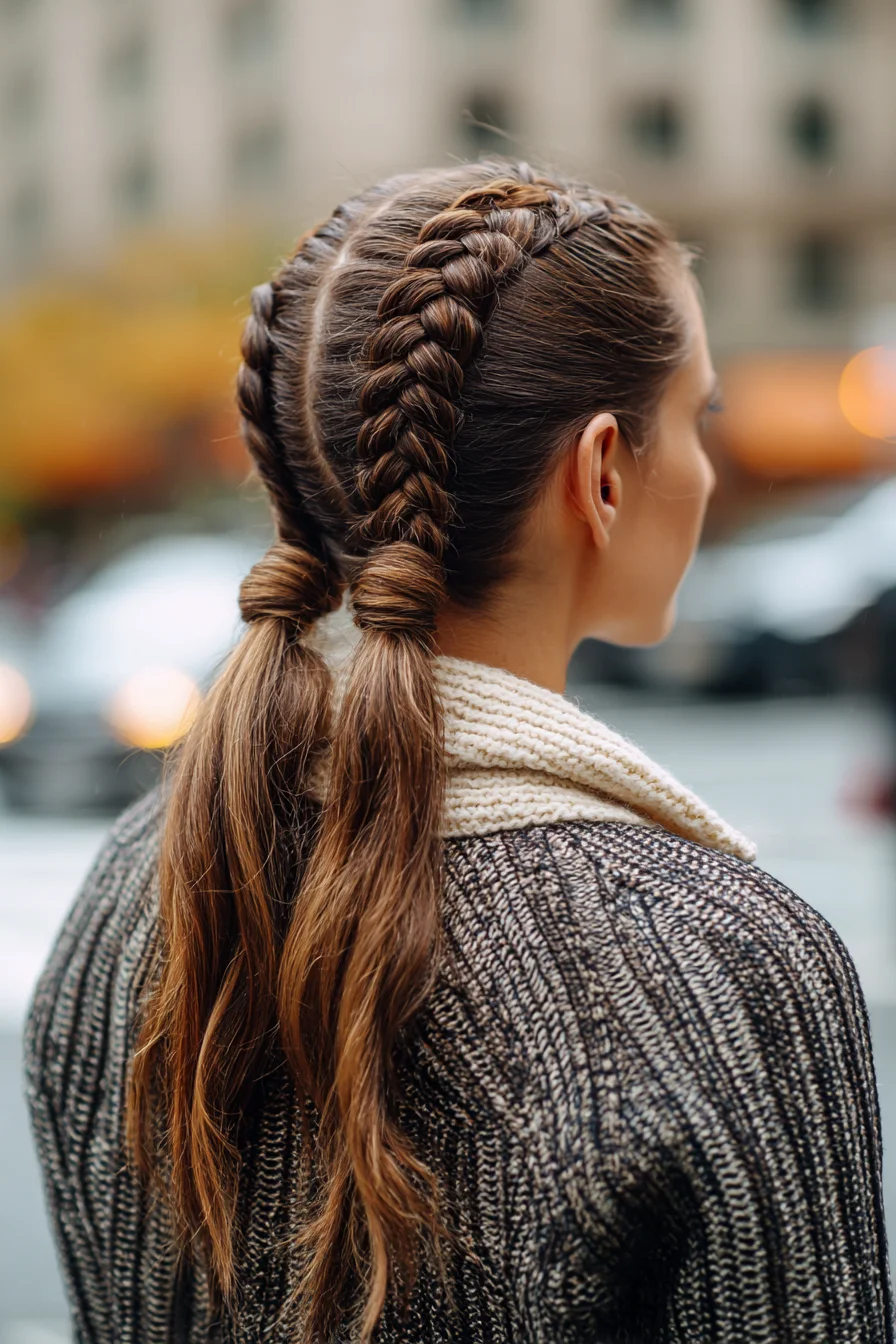
Suitable for medium to long hair with medium to thick density, this look works best on straight to wavy textures — fine hair benefits from texturizing spray for grip, while very thick hair may need extra smoothing. Technique: create a precise center part, brush hair smooth, Dutch-braid each side tightly from the hairline to the nape, secure with small elastics, then gather the braided tails into low ponytails and wrap a thin section of hair around each elastic, pinning underneath. Tools needed: tail comb, paddle brush, sectioning clips, small clear elastics, bobby pins, and optional blow-dryer or flat iron for smoothing. Products required: lightweight smoothing serum or anti-frizz cream, texturizing spray or dry shampoo for hold, light-hold gel for clean edges, and a flexible-hold hairspray to finish. Difficulty: Intermediate — requires even tension and symmetrical braiding; allow 20–35 minutes depending on skill and hair thickness. Maintenance tips: sleep on a silk pillowcase or tie with a silk scarf, refresh length with dry shampoo, retighten elastics and pins as needed, and avoid overly tight braids to prevent tension-related breakage.
Double Dutch Braids into Textured Braided Ponytails
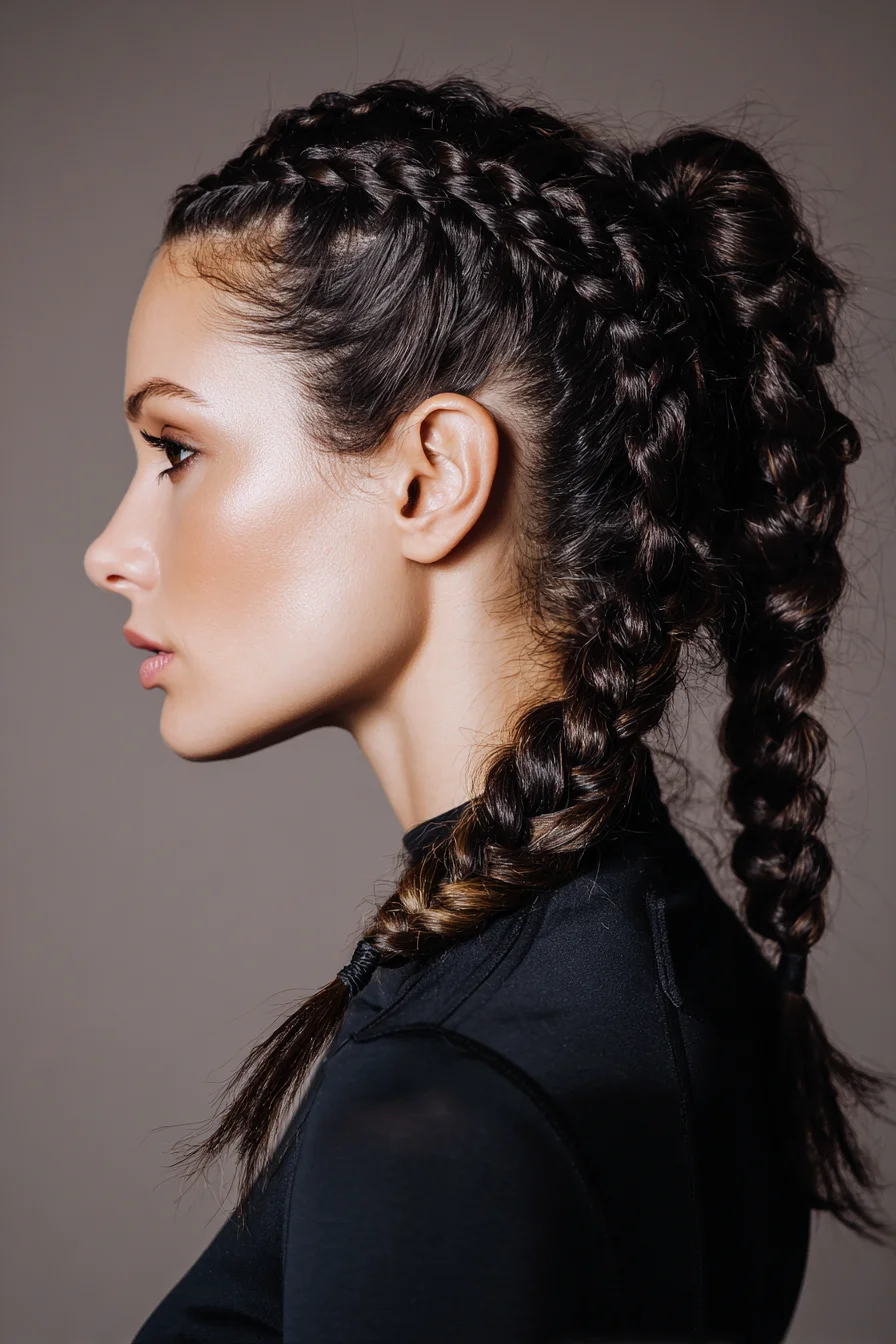
Salon-tested for versatility, this look works best on medium to thick straight or wavy hair; fine hair benefits from light texturizing powder or clip-in extensions, and loose curls can be smoothed with a blow-dry before braiding. Technique: create a clean center part, section two equal panels, and Dutch-braid each panel tightly along the scalp adding hair as you move back. Continue the braid past the nape into a three-strand braid, secure with elastics, and pancake the braids gently for width and texture. For the ponytail effect, gather the braid roots into a low or mid pony and wrap the remaining length into a textured bun or leave as braided tails. Tools: rat-tail comb, sectioning clips, small paddle brush, elastic bands, fine-tooth comb. Products: lightweight styling cream or pomade for control, texturizing spray or powder for grip, light-hold hairspray, and edge-control for baby hairs. Difficulty: intermediate — expect 30–45 minutes. Maintenance: sleep on a silk pillowcase, refresh with dry shampoo and mist, re-tighten elastics after 1–2 days, and avoid excessive tension to protect the hairline.
Wrapping up, as Lena I recommend choosing a two-braided ponytail that complements your daily routine and hair texture. For casual days try messy Dutch braids feeding into a low ponytail; for events choose glossy, smooth braids with a wrapped elastic and shine serum. Protect hair by braiding on slightly dirty hair (a day after washing) to help hold texture, use heat protectant if you curl before braiding, and sleep on a silk pillowcase to extend wear. If your hair is fine, add lightweight volumizing powder or clip-in micro extensions to boost fullness. For thick hair, soften bulk by blow-drying with a round brush before sectioning. Use the 16 step-by-step images to match sectioning and finishing choices, and bring your favorite image to your stylist for exact replication. Book a consult if you want a tailored modification — happy braiding from my salon chair to yours.