
Hi, I’m Lena — a professional hairstylist with over a decade behind the chair. In this gallery I present 28 basketball hairstyles for women, designed for players, coaches, fitness lovers, and anyone who wants a sporty, polished look that survives sweat and motion. You’ll find everything from high ponytails, braided buns, and cornrows to sleek low buns, protective twists, and quick transition styles that move from court to coffee. I’ve tailored each look to suit different hair textures, lengths, and levels of maintenance so you can choose styles that protect your hair while keeping it secure. Pro tips I use in the salon: pick snag-free elastics, prep with a light leave-in and anti-frizz serum, use gel or edge control for slick finish, and reinforce styles with discreet pins or a headband. These 28 images are practical, flattering, and easy to customize — perfect if you need reliable, stylish hair for game day or everyday training.
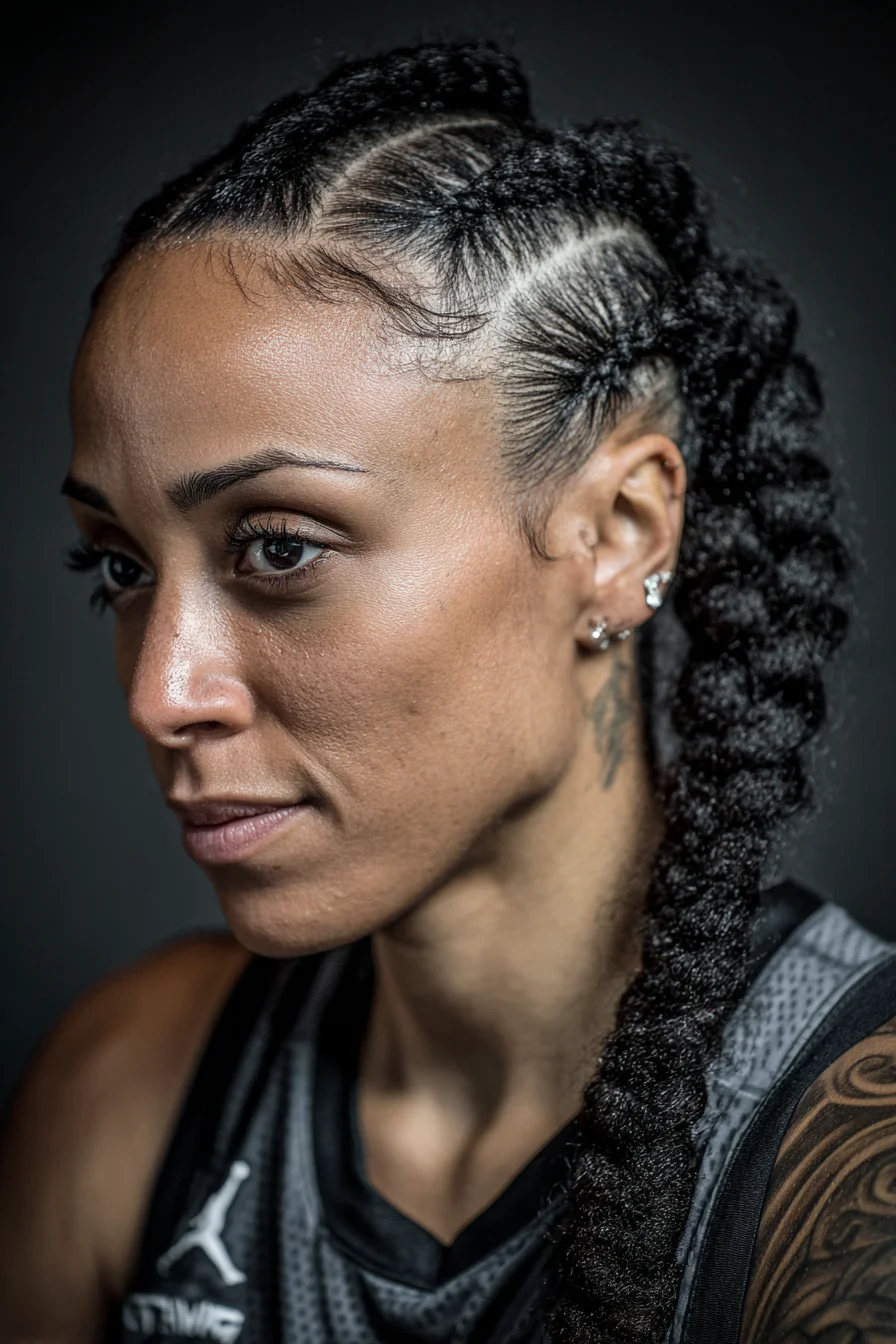
Feed-In Cornrows into Long Textured Braided Ponytail
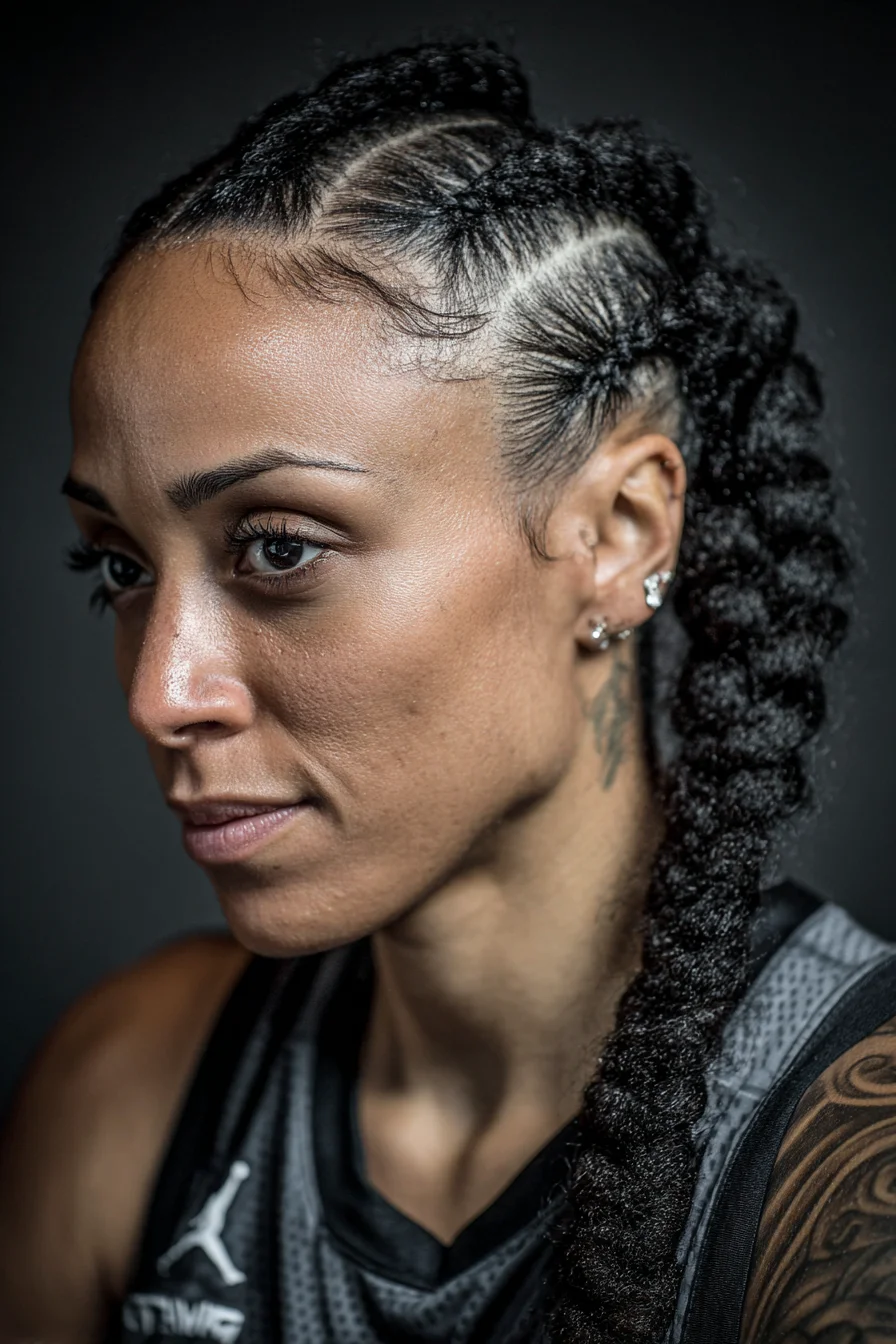
Suitable for Type 3 to 4 textured hair, this feed-in cornrow look works well on medium to thick densities and can be achieved on straighter hair with added extension or texturizing products. Start on freshly washed, detangled hair. Section precise straight parts with a rat-tail comb and clip away sections. Begin feed-in or stitch braids at the hairline, gradually adding natural hair or pre-looped extension for length and fullness, then gather into a long three-strand or rope braid down the back. Tools: rat-tail comb, duckbill clips, small elastics, edge brush, wide-tooth comb, and extension loop tool (optional). Products: leave-in conditioner, light-hold gel or braiding cream, edge control, lightweight oil, and setting mousse or spray. Difficulty: intermediate — requires steady parting and consistent tension; allow 60–120 minutes depending on size and extensions. Maintenance tips: sleep with a satin scarf/bonnet, refresh edges with edge control and a soft brush, moisturize the scalp with diluted oil or a water-based spray twice weekly, avoid over-tightening to prevent breakage, and expect to redo or tighten sections after 3–6 weeks. Remove extensions gently and deep-condition natural hair between installs.
Textured Cornrow Space Buns — Double Braided Buns for Natural Hair
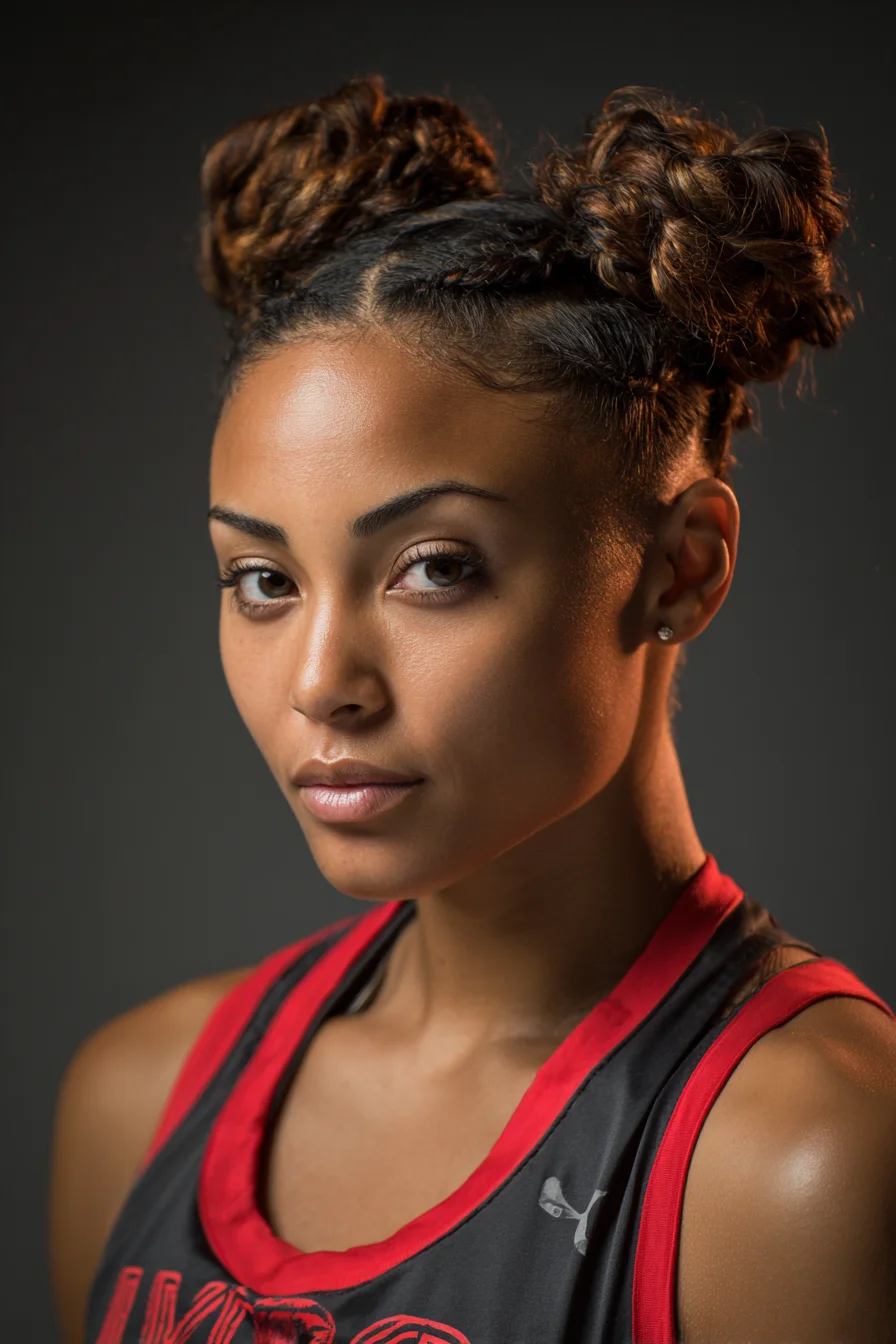
This look suits textured hair (3A–4C) and medium-to-thick strands but can be adapted for straighter hair with added texture. Start on detangled, slightly damp hair: create a clean center part, then cornrow two small, face-framing braids along each side toward the crown. Gather each side into a high ponytail, then either two-strand twist or braid the loose hair and wrap into compact buns, securing with elastics and long bobby pins for a soft, elevated finish. Tools: rat-tail comb, wide-tooth comb, sectioning clips, snag-free elastics, bobby pins, and an edge brush. Products: leave-in conditioner, curl cream or butter for definition, light gel or edge control for sleek baby hairs, a lightweight oil or shine spray, and a flexible-hold hairspray. Difficulty: intermediate — requires clean parting and basic braiding/twisting skills; expect 30–60 minutes depending on length and detail. Maintenance: sleep in a silk bonnet or scarf, refresh edges with a dab of gel, lightly mist and re-twist any looser sections, and avoid over-tightening to protect the hairline. Re-do cornrows every 1–2 weeks to prevent buildup and scalp stress.
Upswept Mini-Twist Pompadour on Natural Afro-Textured Hair
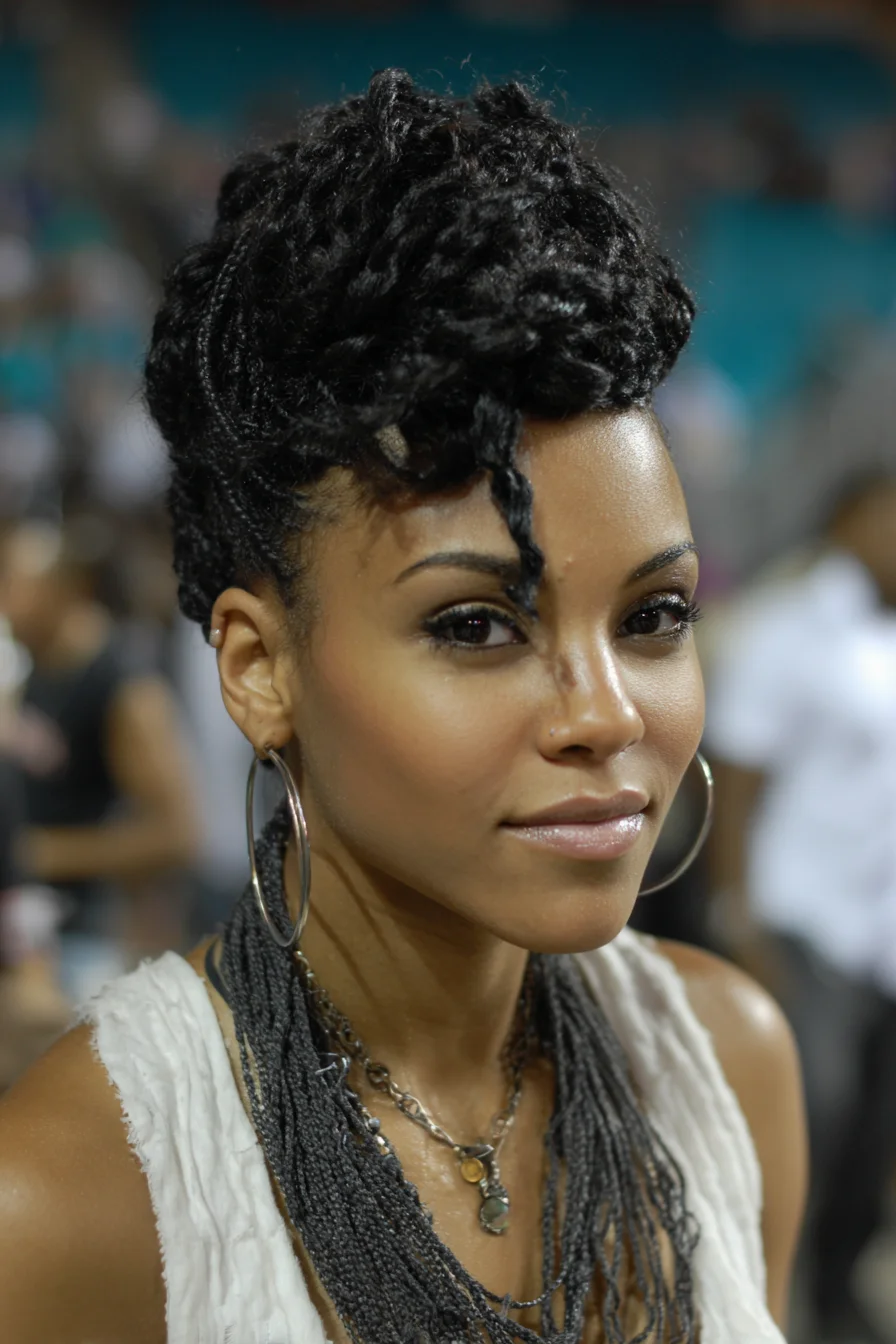
This elegant upswept pompadour uses mini-twists to create height and texture, best suited for 3B–4C natural hair or relaxed hair with strong curl pattern. Begin on freshly cleansed, detangled hair that’s been lightly stretched (blow-dry on low or banding). Section the hair into small parts and create uniform two-strand mini-twists or finger-twists from the base to mid-length. Gather the twists toward the crown and roll or pin them forward to build volume in a pompadour shape; leave one face-framing twist or curl out for a soft finish. Tools: rattail comb, sectioning clips, hair elastics, long bobby pins, and a fine-tooth tail comb for edges. Key products: a moisturizing leave-in, twist cream or butter, light-hold gel for edges, a finishing serum for shine, and a medium-hold hairspray. Difficulty: moderate — time-consuming but salon-friendly; requires precision in parting and pinning. Maintenance: sleep with a silk bonnet or scarf, refresh edges with a bit of gel, rehydrate twists with a water-based mist and lightweight oil, and retwist or tighten loose sections every 4–6 weeks to preserve shape.
Cornrow Accents with Textured High Bun — Natural Hair Braided Updo
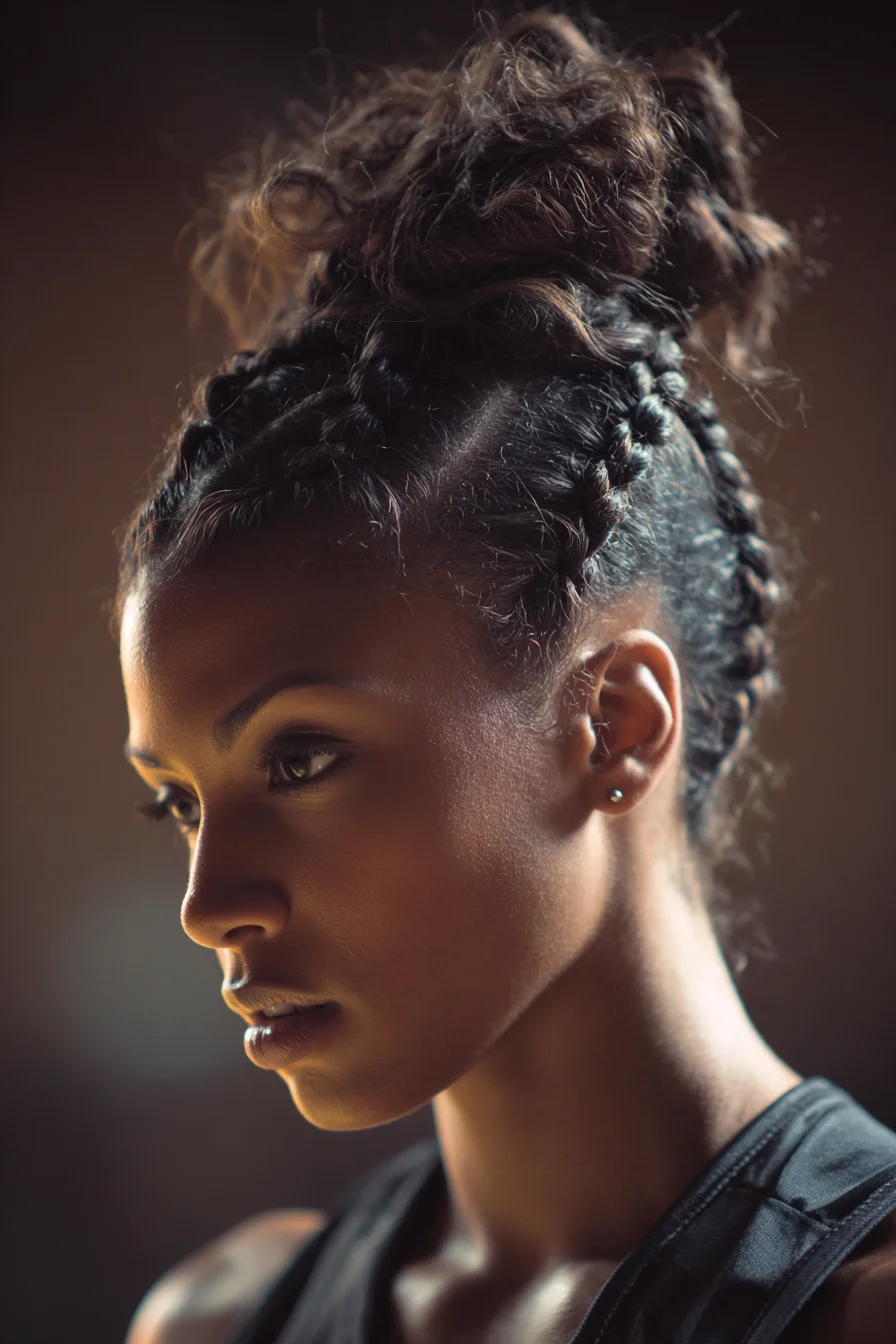
This polished braided updo suits 3A–4C natural textures and medium to thick hair densities. Start with clean, detangled hair dampened with a spray bottle; apply a leave-in conditioner and light styling cream to define texture. Section hair with a rat-tail comb and create even cornrows from the hairline toward the crown (2–6 rows depending on desired look). Secure braid ends at the crown with a small elastic, then shape the remaining length into a textured high bun, pinning pieces with bobby pins to create volume and movement. Use edge control or gel and a soft brush to smooth the perimeter for a sleek finish and finish with a light-hold hairspray to set flyaways. Tools needed: rat-tail comb, sectioning clips, wide-tooth comb, brush, small elastics, bobby pins, spray bottle. Products: leave-in conditioner, curl cream or butter, edge control, lightweight oil/serum, light-hold hairspray. Difficulty: intermediate — basic cornrowing skill and neat parting required. Maintenance: sleep on a satin bonnet, refresh with water + leave-in every 2–3 days, oil the scalp weekly, and redo braids after 1–2 weeks to avoid breakage.
Sleek Parallel Cornrows Merged into Thick Center Braids
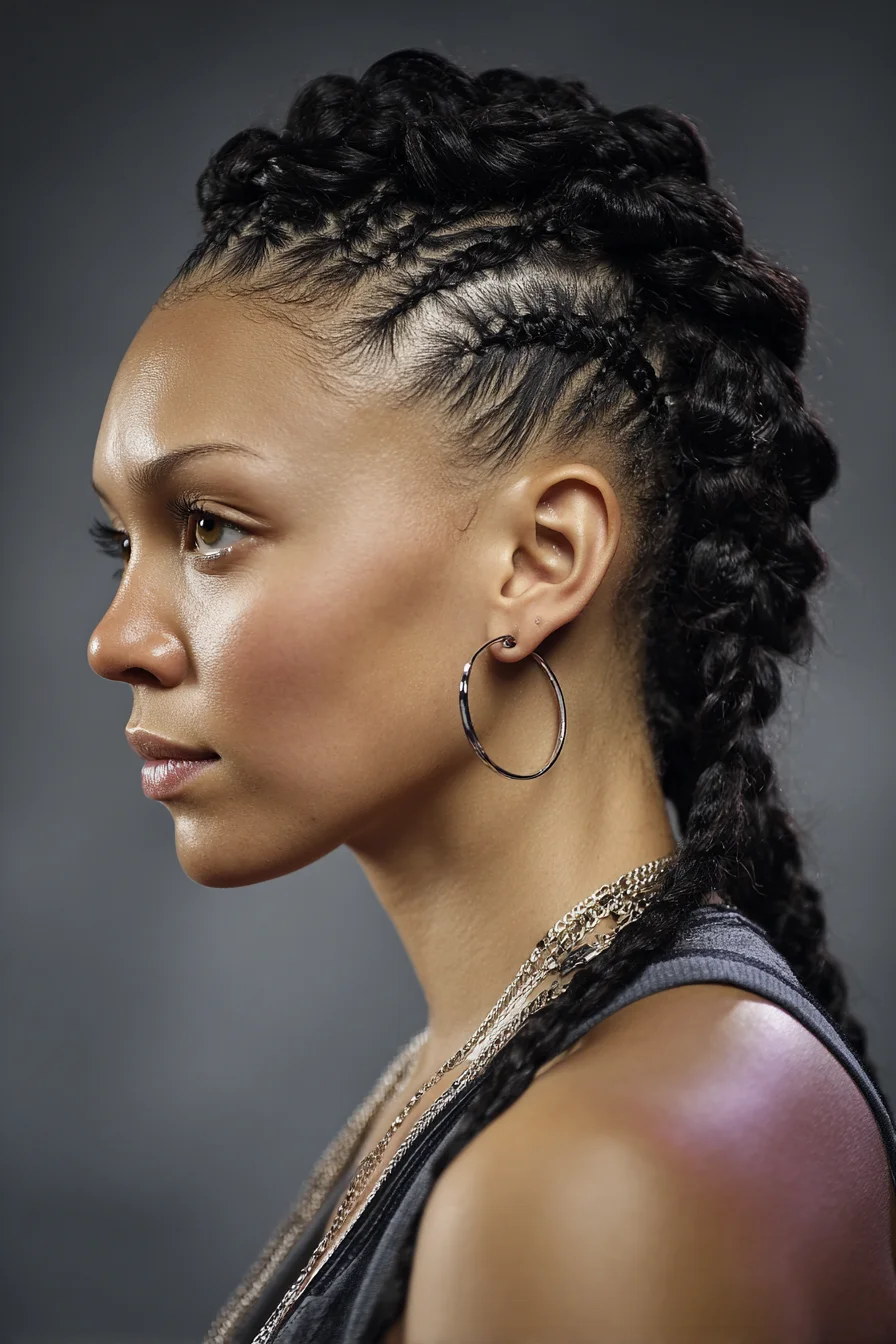
This style suits textured hair (3A–4C) and can be adapted for straighter hair with added extensions for volume and length. Start on freshly washed, detangled hair; section the sides into even narrow panels with a rat-tail comb. Create tight cornrows (Dutch or three-strand underbraids) using a feed-in technique on each panel so the rows sit flat and neat. As the rows approach the crown, merge pairs or groups into larger three-strand or rope-style braids running down the center or back; finish with small elastics or neatly tucked ends. Tools required: rat-tail comb, sectioning clips, edge brush, fine-tooth comb, small elastics, and optional synthetic hair and a crochet needle. Recommended products: leave-in detangler, lightweight holding gel/edge control, braid spray or leave-in moisturizer, setting mousse for flyaways, and a light shine oil. Difficulty: intermediate to advanced — expect 1.5–3 hours depending on size and extensions; professional installation is recommended for a clean finish. Maintenance: sleep on a silk scarf or bonnet, refresh edges sparingly with gel, apply braid spray or diluted leave-in weekly, keep the scalp clean with gentle cleansing and light oils, and remove or redo within 6–8 weeks to avoid breakage.
Sleek Triple Cornrows Leading to a Thick Feed‑In Braid
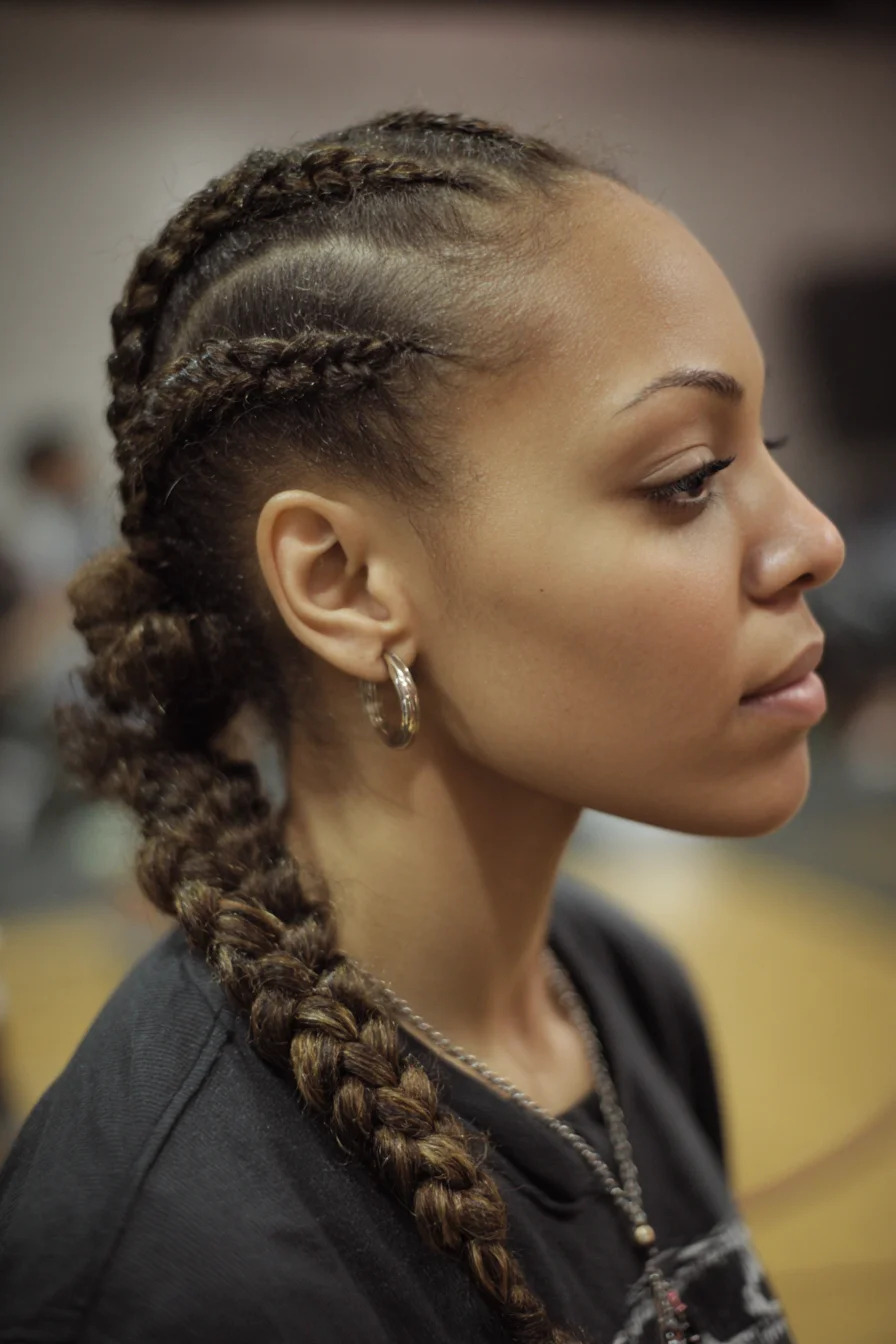
This look works best on naturally textured, curly or coily hair but is also achievable on wavy or straighter hair with added feed‑in extensions for fullness. Start by creating three even sections with a rat‑tail comb and apply a lightweight leave‑in or detangling cream. Use the feed‑in braiding technique: begin tightly at the hairline, gradually adding small pieces of extension hair to build a chunky, seamless braid that feeds back into a single thick plait. Tools needed: rat‑tail comb, sectioning clips, elastic bands, rubber edge brush and blunt needle (if sewing in extensions). Recommended products: smoothing pomade or edge control for clean parts, hold gel for flyaways, braid spray for moisture and a light finishing oil for shine. Difficulty: moderate — requires intermediate braiding skills and patience; allow 45–90 minutes depending on extensions. Maintenance tips: sleep on a satin bonnet or pillowcase, lightly mist braid spray twice weekly, avoid heavy oils at the roots to prevent buildup, retouch edges after a few days and refresh the outer cornrows every 2–4 weeks to relieve tension. For sensitive scalps, loosen the initial cornrows and use softer extension hair.
Double Dutch (Boxer) Braids — Sleek Two-Strand Cornrows for Natural & Thick Hair
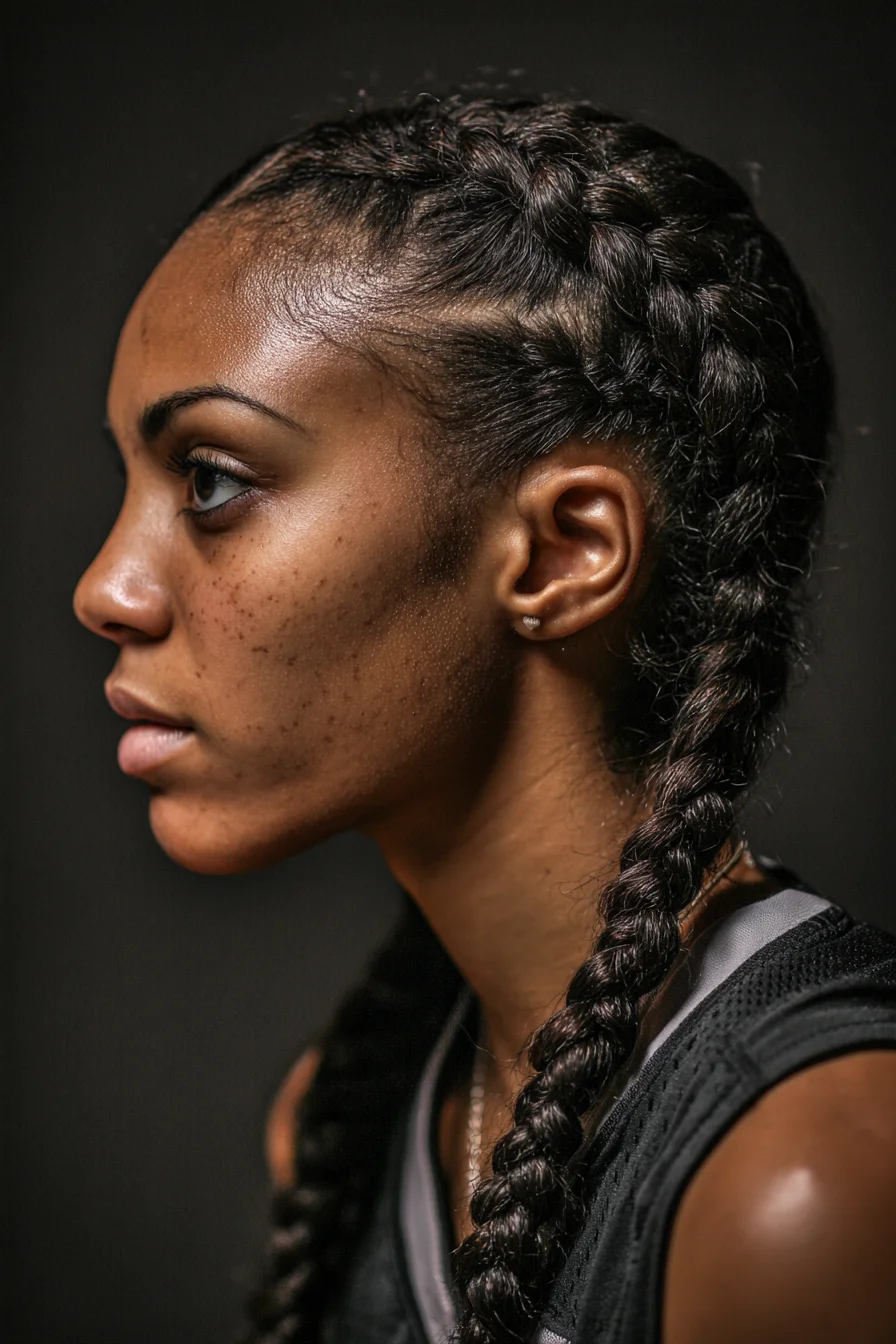
Suitable for natural, textured, curly and thick straight hair, these double Dutch (boxer) braids give secure, low-maintenance styling for active lifestyles. Start with clean, detangled hair and create a precise center part. Apply a leave-in conditioner and a small amount of lightweight styling cream or gel to smooth flyaways. Section one side and begin an underhand (Dutch) braid, adding hair evenly along the hairline and keeping consistent tension to avoid breakage; repeat on the other side. Secure ends with a small elastic and optionally wrap the base with a tiny amount of edge control for a polished finish. Tools: rat-tail comb, sectioning clips, boar-bristle or soft brush, edge brush, small elastics and optional extension hair for length/volume. Products: leave-in conditioner, smoothing cream or gel, edge control, lightweight oil for shine and a dry shampoo for refreshes. Difficulty: Intermediate — requires braiding proficiency and takes ~30–45 minutes. Maintenance tips: sleep on a satin bonnet or pillowcase, lightly mist scalp and braid with a moisturizing spray, refresh edges as needed, and redo after 1–2 weeks to prevent hair stress or product build-up.
Half-Up High Ponytail for Defined Curly Hair
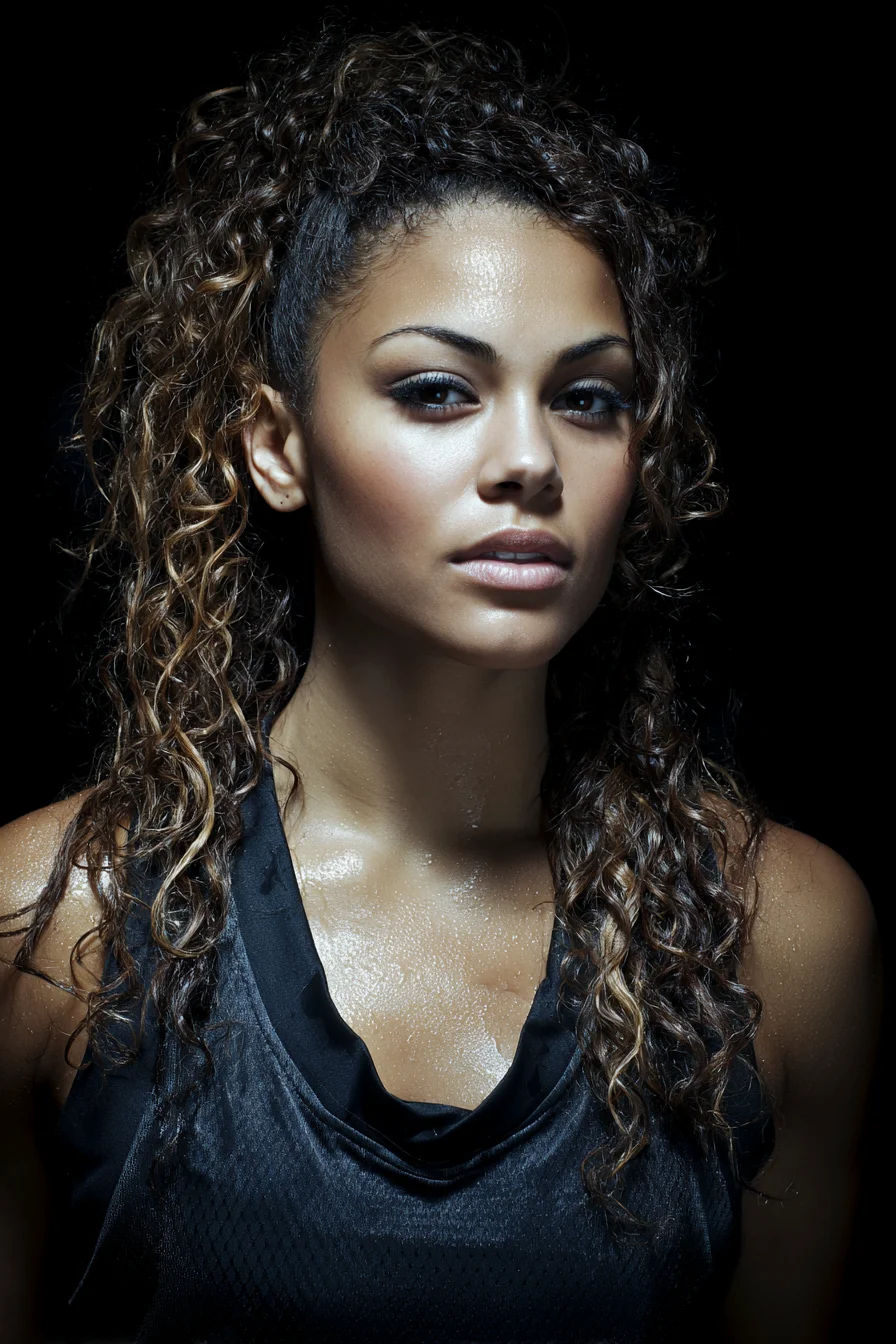
This half-up high ponytail is ideal for naturally wavy to curly textures (type 2C–3C) and works well on medium to thick density hair. Begin on clean, damp hair: apply a lightweight leave-in conditioner and a silicone-free curl cream from mid-lengths to ends. Use a wide-tooth comb or fingers to detangle, then define individual curls with finger-coiling or a small-barrel curling wand for added definition. Gather the top crown section and secure with a snag-free elastic at the high point for lift, leaving face-framing curls loose. Tools needed: wide-tooth comb, microfiber towel or T-shirt, hair ties, clips, diffuser (optional), small curling iron (optional). Products required: sulfate-free shampoo/conditioner, leave-in conditioner, curl cream or mousse, light gel or styling custard for hold, anti-frizz serum or oil. Difficulty: moderate — requires basic curl definition skills and sectioning. Maintenance tips: pineapple at night or use a satin bonnet/pillowcase, refresh with a water + leave-in spray or curl refresher, avoid brushing dry, and deep-condition weekly to maintain elasticity and shine. Re-secure loose roots gently to preserve the lifted shape.
Cornrow Braids with Curly Leave-Out — Sculpted Cornrows to Curly Ends for Natural Hair
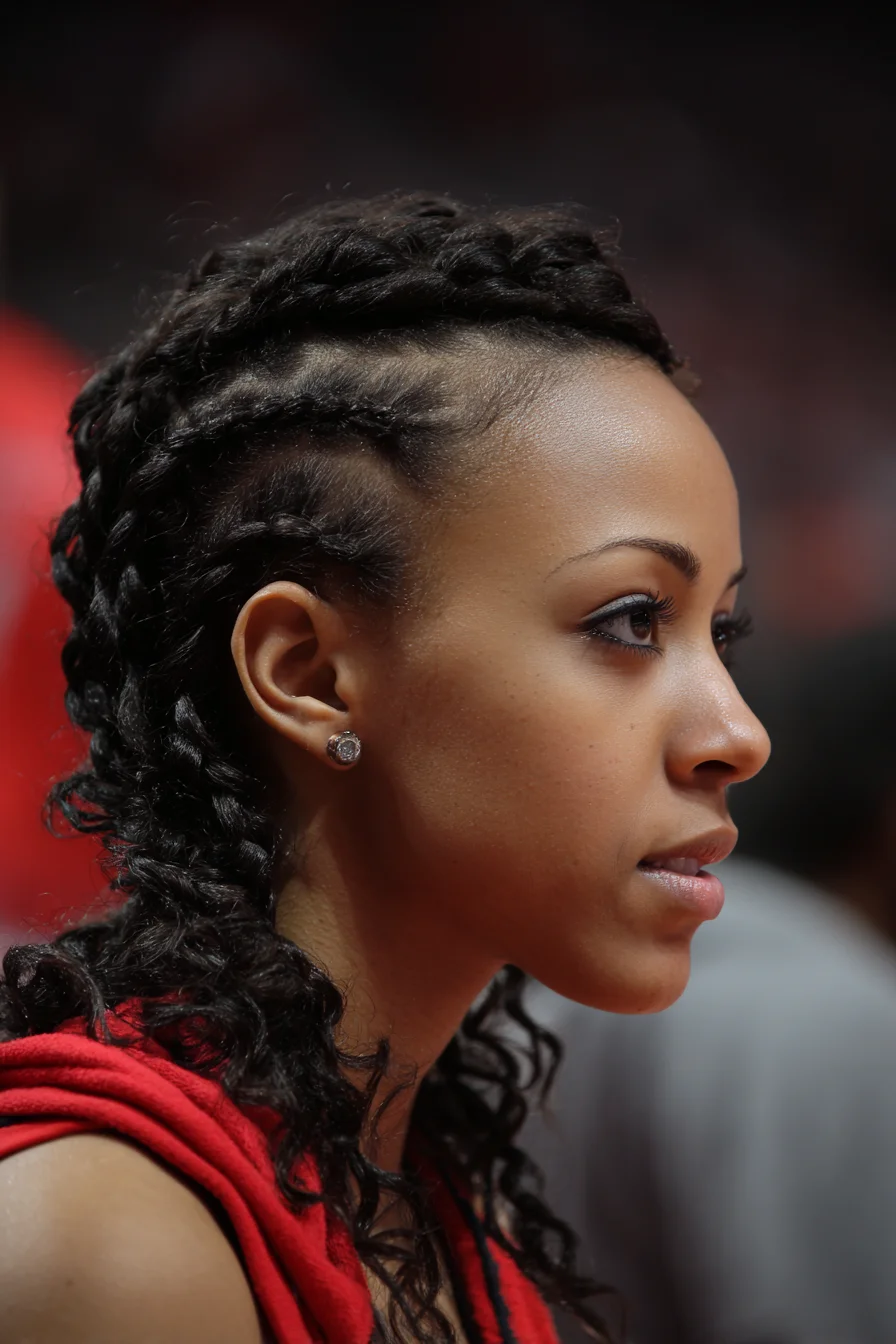
This look suits Type 3 and 4 textured hair and medium to high density. The technique uses clean parting to create flat cornrows along the scalp that transition into loose, defined curly ends (leave-out or added extensions). Start on damp, detangled hair: section with a rat-tail comb, clip away unused sections, and braid each cornrow with moderate tension—use the feed-in method if you want thicker, seamless braids. Secure braid ends with small elastics and style the loose ends with a curl-defining cream or small-barrel flexi-rods for extra definition. Tools needed: rat-tail comb, sectioning clips, small elastics, edge brush, wide-tooth comb, and optional flexi-rods. Products: hydrating leave-in, lightweight gel or edge control for neat parts, curl cream or mousse for leave-out, and a light oil for scalp shine. Difficulty: intermediate — typically 45–90 minutes depending on braid count. Maintenance: sleep on a silk bonnet or pillowcase, refresh edges with a light gel, spray a moisturizing mist twice weekly, and avoid excessive tension to prevent breakage. Retouch cornrows every 3–6 weeks as needed and deeply condition the hair when uninstalled.
Sleek Feed‑In Cornrows into Long Thick Braids — Sporty Protective Style
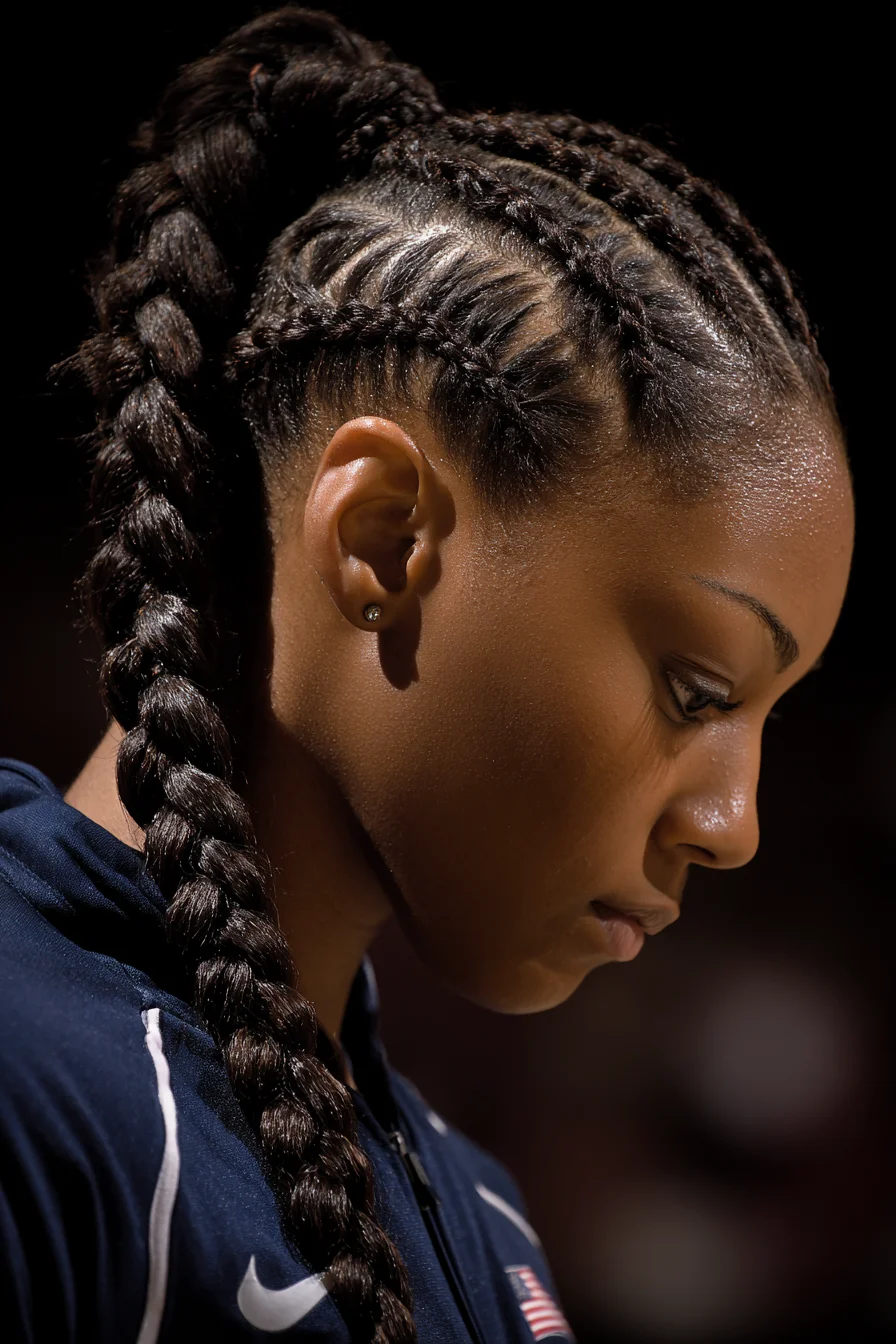
This sleek feed‑in cornrow style finished into long, thick braids works best on medium to coarse natural hair or relaxed hair with density; fine hair can achieve the look with lightweight Kanekalon extensions for volume. Technique: create clean, parallel parts with a rat‑tail comb, apply a water‑based styling gel and edge control, then braid using the feed‑in method (adding extension hair gradually) to keep the roots flat and uniform before finishing each section into a three‑strand braid. Tools needed: rat‑tail comb, sectioning clips, edge brush, small elastic bands, extension hair (optional), and a wide‑tooth comb for detangling. Products required: leave‑in moisturizer, water‑based gel or pomade, edge control, light oil or sheen spray, and a lightweight holding spray. Difficulty level: intermediate — requires steady parting and even tension; allow 60–120 minutes depending on length and number of braids. Maintenance tips: sleep on a silk/satin scarf or bonnet, moisturize scalp and braid length weekly with a spritz of leave‑in/oil, avoid excessive re‑styling to prevent breakage, and plan for a touch‑up or take‑down every 6–8 weeks to protect hair health.
Sleek Double Dutch (Boxer) Braids with Smooth Edge Styling
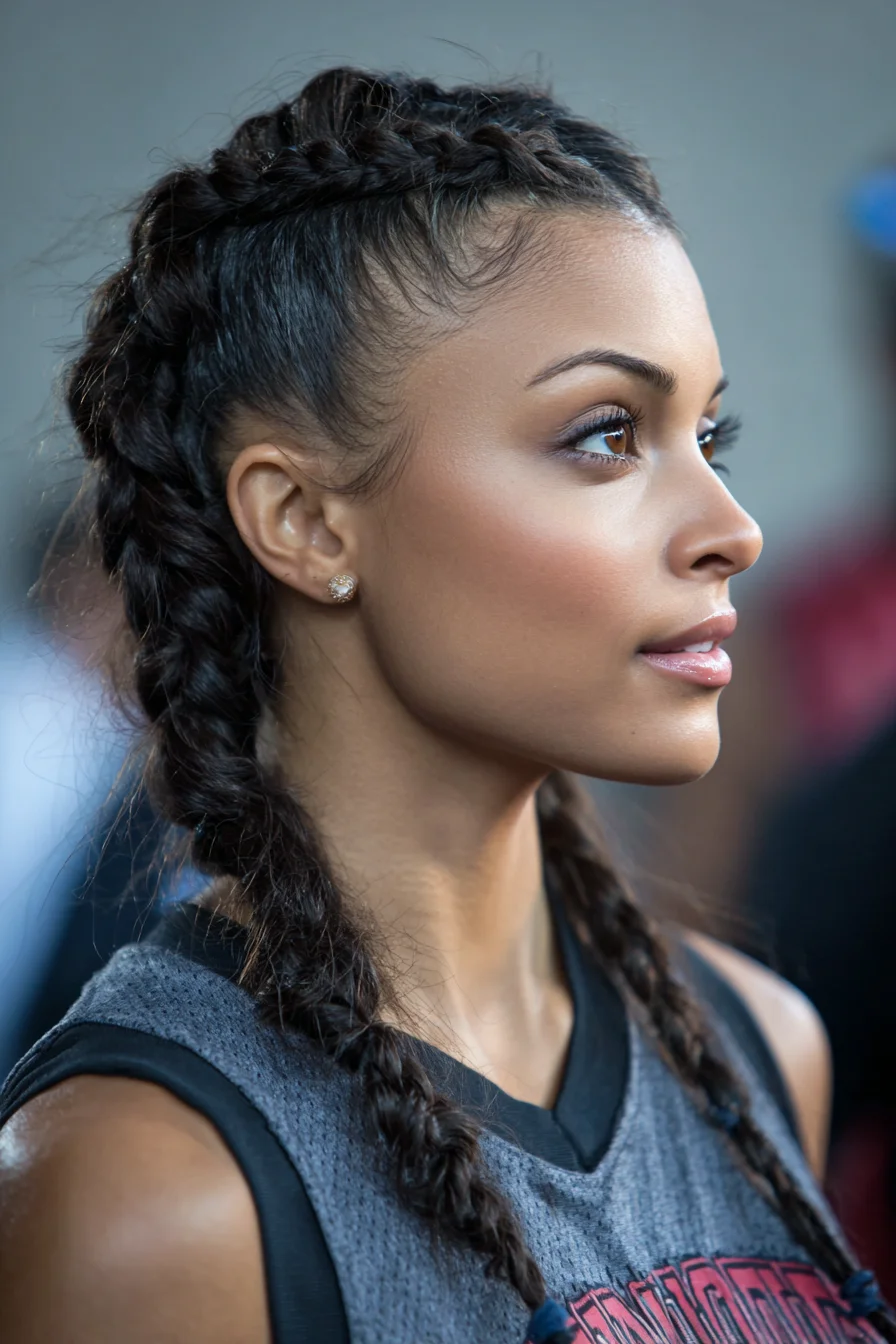
This look features two sleek Dutch (boxer) braids with smoothed baby hairs — a practical, salon-ready style that suits medium to thick straight, wavy, or curly hair. Fine hair can achieve similar results using a texturizing spray or lightweight extensions to add grip and volume. Technique: create a clean center part, clip one side away, and Dutch-braid (underhand) from the hairline down to the nape, feeding in sections for a tight, flat finish; repeat on the other side and secure with small elastics. Tools needed: rattail comb for parting, sectioning clips, boar-bristle brush, small clear elastics, edge brush, and a wide-tooth comb. Products required: lightweight leave-in detangler, texturizing spray or mousse for grip, firm-hold gel or edge-control for baby hairs, a light-hold hairspray, and a finishing shine serum. Difficulty level: intermediate — requires consistent tension and basic braiding skill; expect 25–45 minutes. Maintenance tips: sleep with a silk/satin scarf or bonnet, refresh with a mist of leave-in spray, reapply edge control as needed, oil the scalp gently, and redo braids after 1–2 weeks to avoid buildup and tension.
Double Dutch/Cornrow Braids into Textured Two-Strand Braids
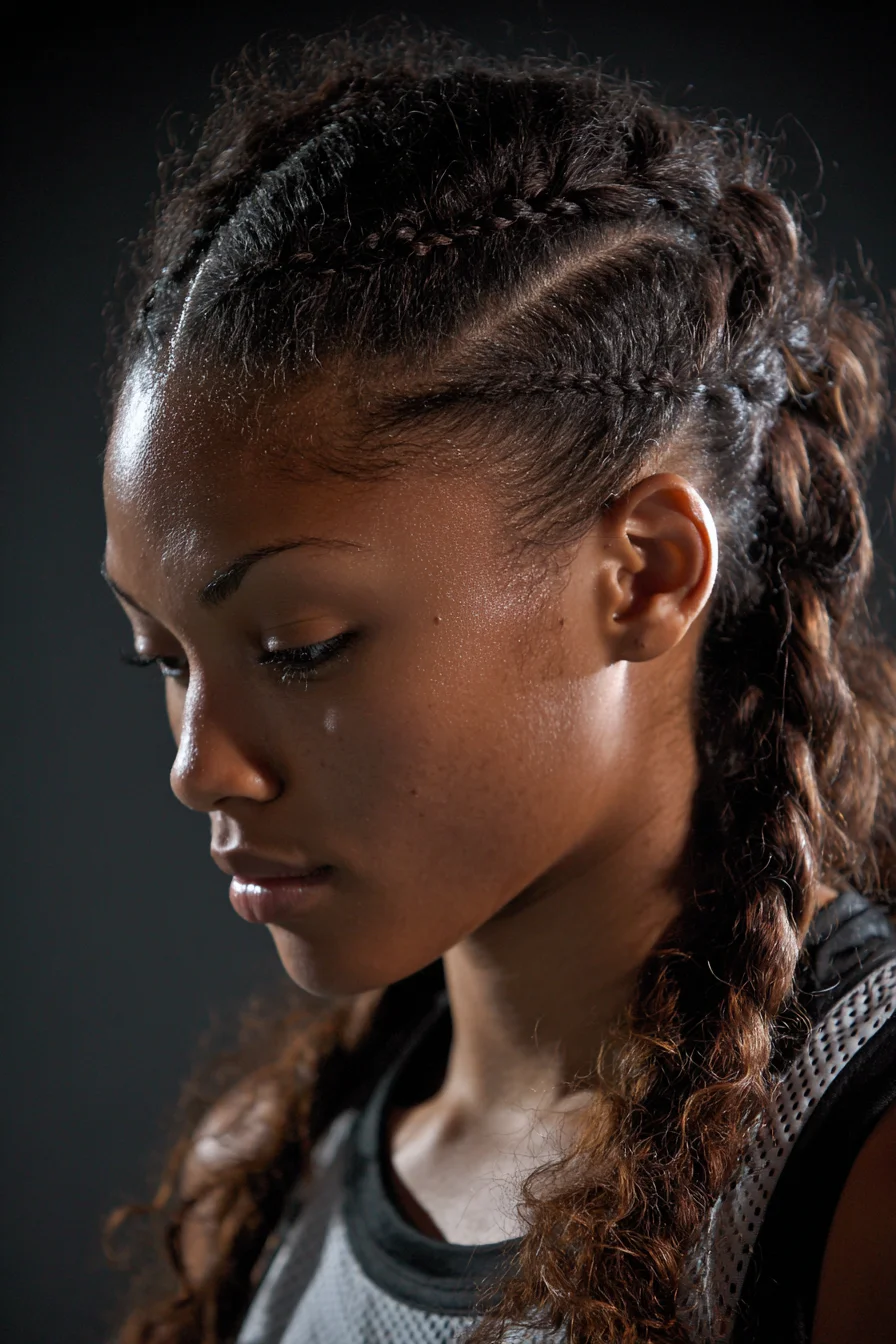
This polished protective look pairs close-to-scalp Dutch/cornrow braids that flow into loose, textured two-strand braids — a practical choice for active clients. Best suited for Type 3–4 curly or coily hair with medium to high density; fine or straight hair can achieve similar volume with a texturizing spray or light extensions. Start on clean, detangled hair that’s lightly damp with leave-in conditioner. Use a rat-tail comb to create 1/4–1/2-inch partings, clip sections out of the way, then apply a small amount of braiding gel or cream to each section. Braid using a Dutch or feed-in technique toward the nape, secure ends with small elastics, then gently pancake the lower lengths for softness and fullness. Tools and products: rat-tail comb, sectioning clips, edge brush, spray bottle, small elastics, leave-in conditioner, firm braiding gel/pomade, lightweight oil or sheen spray, and mousse for added hold. Difficulty: intermediate — typically 30–75 minutes depending on length/density. Maintenance tips: sleep in a silk bonnet, reapply light oil to the scalp twice weekly, refresh edges with edge control, avoid excessive tension, and redo after 2–4 weeks to protect hair health.
Sleek Double Dutch (Boxer) Braids — Ideal for Curly to Coily Hair
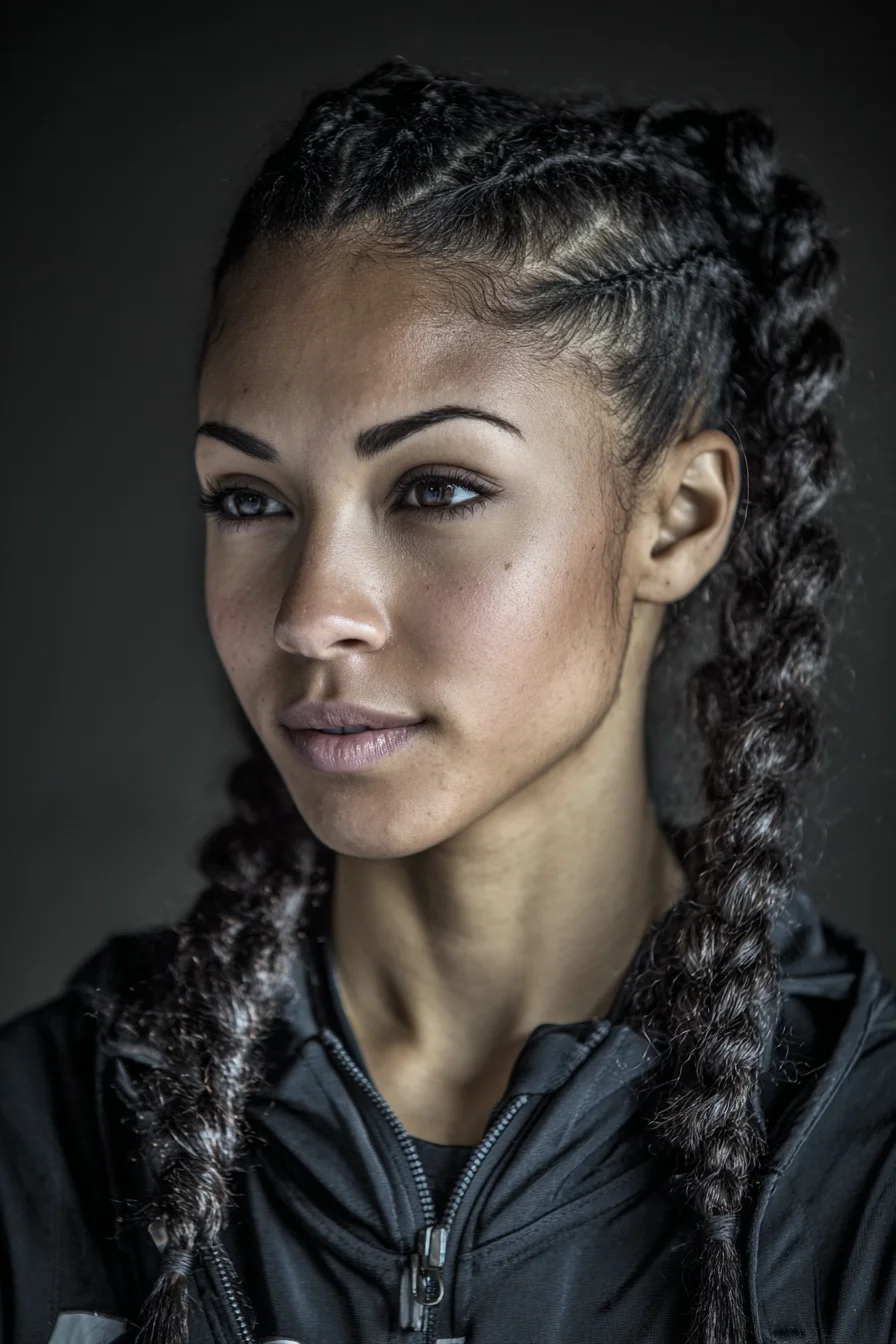
This polished double Dutch (boxer) braid style works best on medium to thick curly, coily or textured hair that holds shape well. Start on clean, detangled hair: create a precise center part with a rat-tail comb, apply a leave-in detangler and a small amount of styling gel or edge control at the hairline, then Dutch-braid each side (braiding under rather than over) from the front hairline to the nape. Finish each braid with a three-strand plait to the ends and secure with snag-free elastics. Salon tools: rat-tail comb, wide-tooth comb, detangling brush, sectioning clips, small elastics, and a fine-tooth toothbrush or edge brush. Recommended products: lightweight leave-in conditioner, smoothing cream or styling gel, a light oil (argan/jojoba) for shine, and flexible-hold hairspray. Difficulty: Intermediate — requires even tension and neat parting. Maintenance: sleep on a silk bonnet or pillowcase, refresh edges and flyaways with water or light gel, reapply oil to braid lengths as needed, and avoid over-tightening to prevent scalp strain. Redo braids after 2–3 weeks or sooner if slippage occurs.
Sleek Side Cornrows into High Curly Ponytail
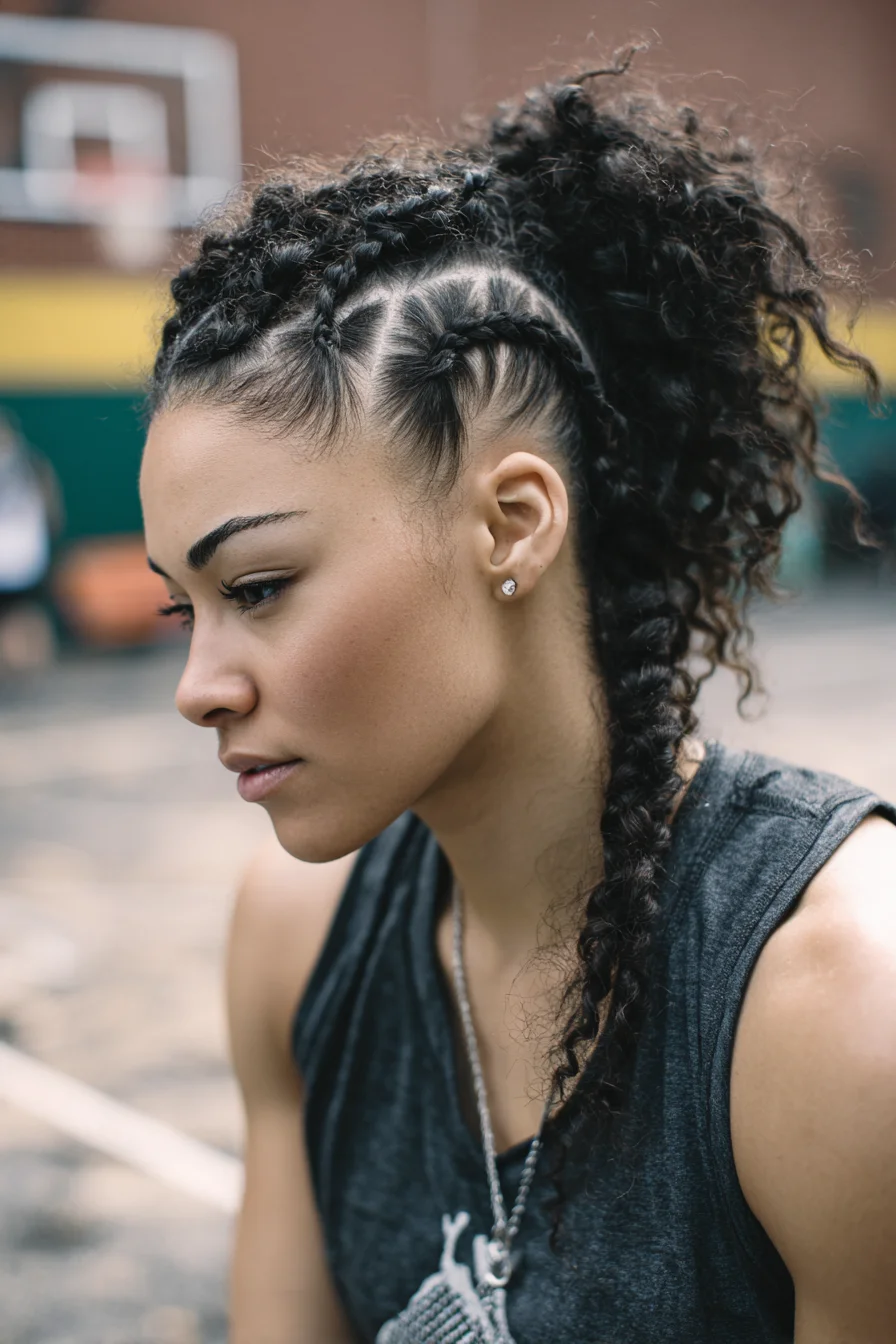
This look works best on textured, curly or coily hair (3A–4C) but can be adapted for straighter hair with added curly extensions. Create clean, triangular or linear partings and braid small-to-medium cornrows using a feed-in technique that transitions into a single or double larger braid gathered at the crown. Leave the ends loose or attach a curly ponytail piece for extra volume. Tools needed: rat-tail comb, sectioning clips, fine-tooth comb, soft bristle brush, elastic bands, and a crochet needle if adding extensions. Products required: a lightweight leave-in conditioner, firm-hold gel or edge control for clean parts, setting mousse to reduce frizz, lightweight oil or serum for shine, and a dry scalp oil if needed. Difficulty: intermediate — requires precise parts and consistent tension; expect 45–90 minutes depending on hair length and extensions. Maintenance tips: sleep with a satin scarf/bonnet, refresh edges with a small amount of edge control, moisturize the scalp and braid roots weekly, avoid overly tight tension to protect the hairline, and retouch or redo braids after 2–4 weeks to prevent matting and breakage.
Sleek Boxer Braids — Tight Cornrow Dutch Braids for Active Looks
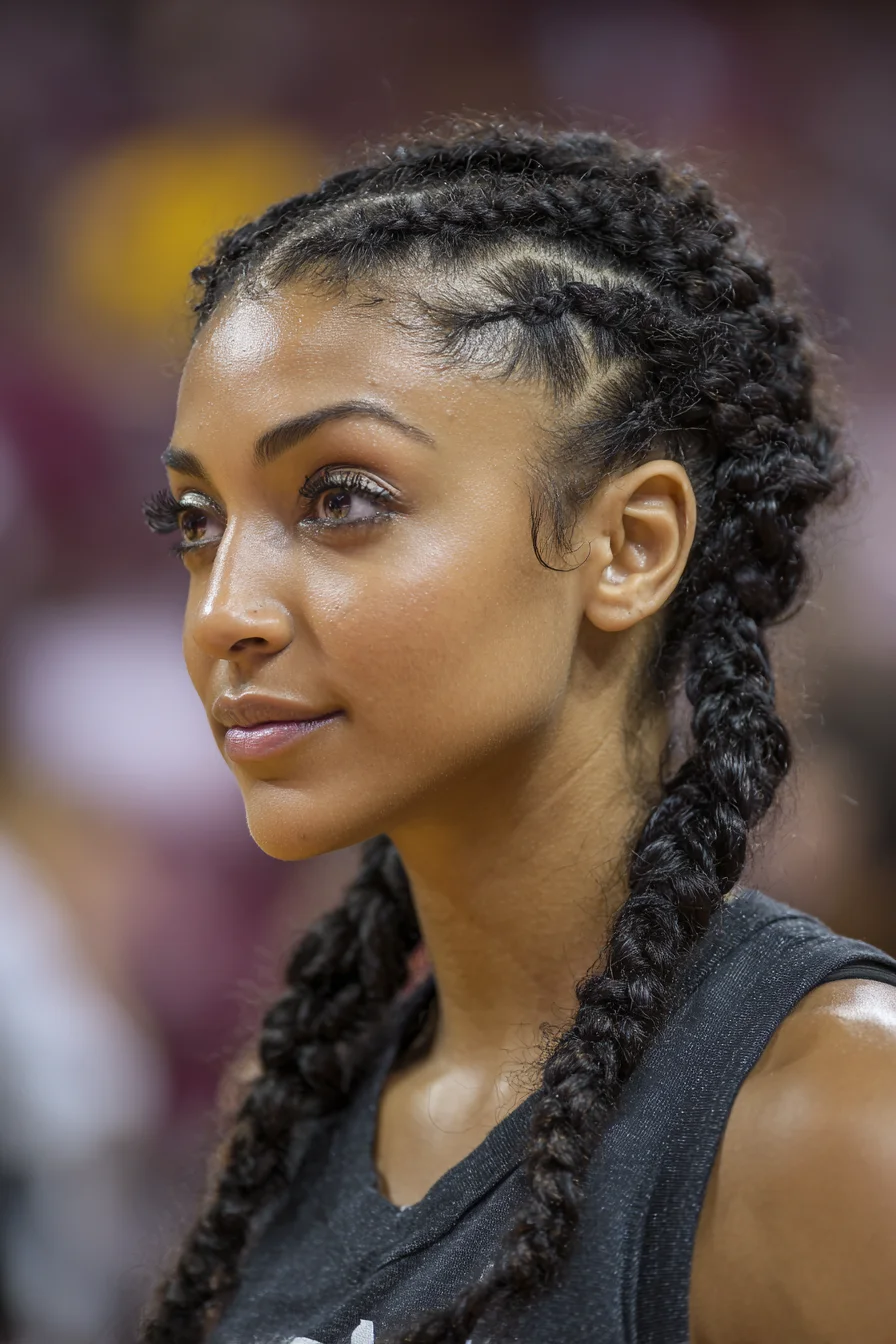
This polished pair of boxer braids (tight cornrow Dutch braids) works best on medium to thick textured hair, including wavy, curly and coily types; fine or straight hair can be prepped with texturizing spray or added braid extensions. Create clean center parting, then Dutch-braid each side from the hairline to the nape, incorporating hair as you go and keeping tension even for a smooth, low-profile finish. Tools: rat-tail comb, sectioning clips, paddle brush, small elastics, edge brush and a mirror. Products: lightweight gel or edge control for sleek roots, a leave-in conditioner or cream to add slip while braiding, a light oil or scalp serum for shine, and a medium-hold hairspray to lock flyaways. Difficulty: intermediate — requires consistent tension and basic Dutch-braiding skill; expect 30–60 minutes depending on length and thickness. Maintenance: sleep with a silk scarf or bonnet, refresh edges with a dab of gel, moisturize the scalp 1–2 times weekly with a light oil, and cleanse with a diluted shampoo or gentle co-wash. Re-do after 2–4 weeks to prevent breakage and maintain scalp health.
Slim Cornrows into High Textured Bun — Protective Style for Natural Hair
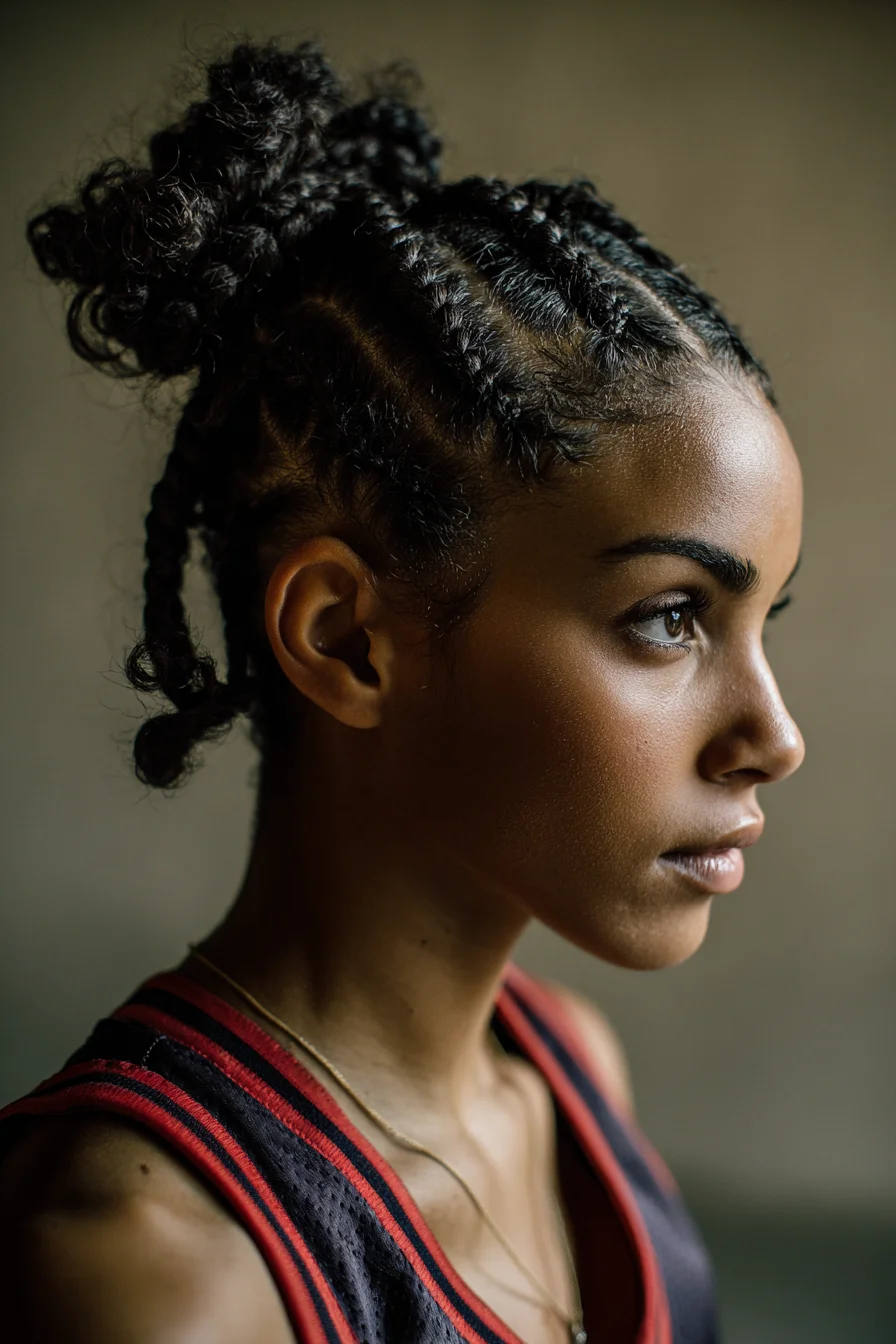
This polished look pairs narrow, straight-back cornrows with a high textured bun — a versatile protective style best suited to 3B–4C natural textures but adaptable for looser curls or chemically relaxed hair with adjusted tension. Technique: detangle and work on damp hair, apply a leave-in conditioner and light styling cream, then create clean parts with a rat-tail comb and clip sections. Braid narrow flat/cornrow braids toward the crown using steady, even tension and feed-in extension hair only if extra length is needed. Gather braid ends into a high bun, wrap or tuck ends, and secure with an elastic and pins. Smooth edges with a small brush and edge control. Tools needed: rat-tail comb, sectioning clips, duckbill clips, edge brush, small elastics, bobby pins. Products required: leave-in conditioner, lightweight styling cream or pomade, edge control gel, light oil or serum, and a light-hold spray or mousse for finish. Difficulty: intermediate — precise parting and consistent braid tension needed. Maintenance tips: sleep on a silk scarf/bonnet, refresh edges with a dab of gel, mist scalp weekly with a water-based moisturizer + oil, avoid over-tightening to prevent breakage, and plan for touch-ups or re-braiding every 3–6 weeks depending on new growth.
Double Dutch Braids with Blunt Fringe
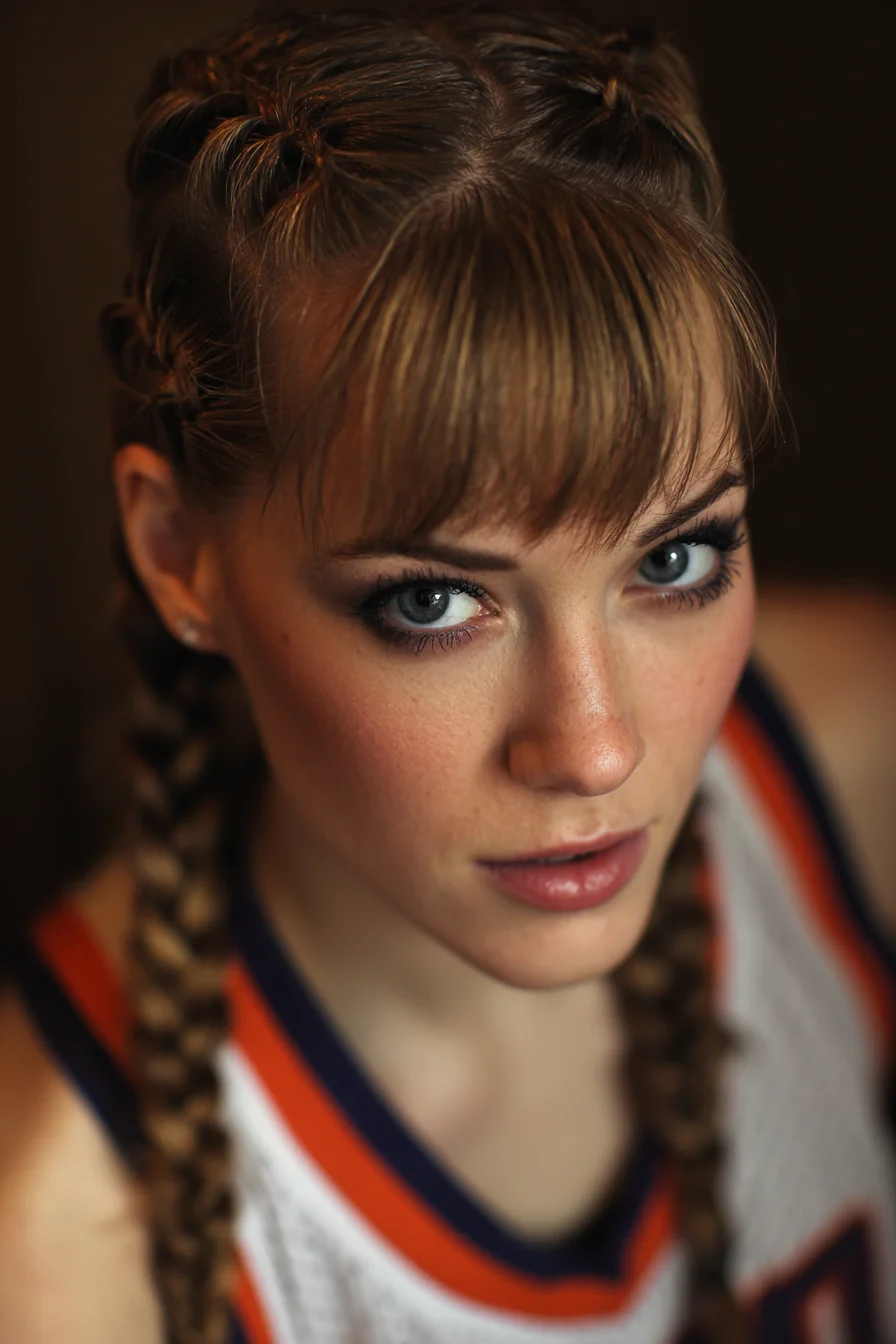
Suitable for medium-to-long hair, especially straight to wavy textures; thick hair produces fuller, more defined braids while finer hair benefits from added texture spray or light teasing. Begin on clean, detangled hair with a precise center part. Create two inverted Dutch braids (cross-under technique) starting at the hairline and work toward the nape, adding small sections for a tight scalp braid. Continue past the crown into regular three-strand braids and secure with small elastics. Style the blunt fringe smooth with a round brush and blow-dryer or a quick flat-iron pass using heat protectant. Tools needed: rattail/parting comb, sectioning clips, paddle brush, fine-tooth comb, small clear elastics, blow-dryer or flat iron. Recommended products: texturizing or sea-salt spray for grip, lightweight smoothing serum for ends, flexible-hold hairspray, and edge-control for baby hairs. Difficulty: intermediate — expect 20–40 minutes depending on skill. Maintenance tips: sleep on a silk pillow or wrap hair in a silk scarf, refresh roots with dry shampoo, smooth edges with a tiny amount of styling cream, and redo braids after 3–5 days to prevent tension and maintain clean-looking fringe.
Double Dutch (Boxer) Braids for Medium–Long Hair

This sporty double Dutch (boxer) braid look works best on medium to long hair and suits straight to wavy textures; very thick hair creates fuller braids while fine hair benefits from added texture or light teasing. Start on slightly dirty or texturized hair: create a precise center part, clip one side, then pick a small front section and Dutch-braid (cross strands under) adding hair as you move toward the nape. Continue into a three-strand braid and secure with a small elastic. Repeat on the other side, keeping even tension for a sleek finish. Tools: tail comb, sectioning clips, paddle brush, small elastics, bobby pins. Products: leave-in detangler, texturizing spray or dry shampoo for grip, lightweight gel or edge control for slicking hairline, anti-frizz serum for ends, flexible-hold hairspray. Difficulty: moderate — requires basic braided technique and control; allow 15–30 minutes. Maintenance: sleep with a silk scarf to reduce frizz, refresh with water + leave-in or texturizer and gently tighten elastics, avoid heavy oils at the roots, and re-braid every 2–4 days for a neat appearance.
Double Dutch Braids (Boxer Cornrows) — Sleek Two-Strand Scalp Braids
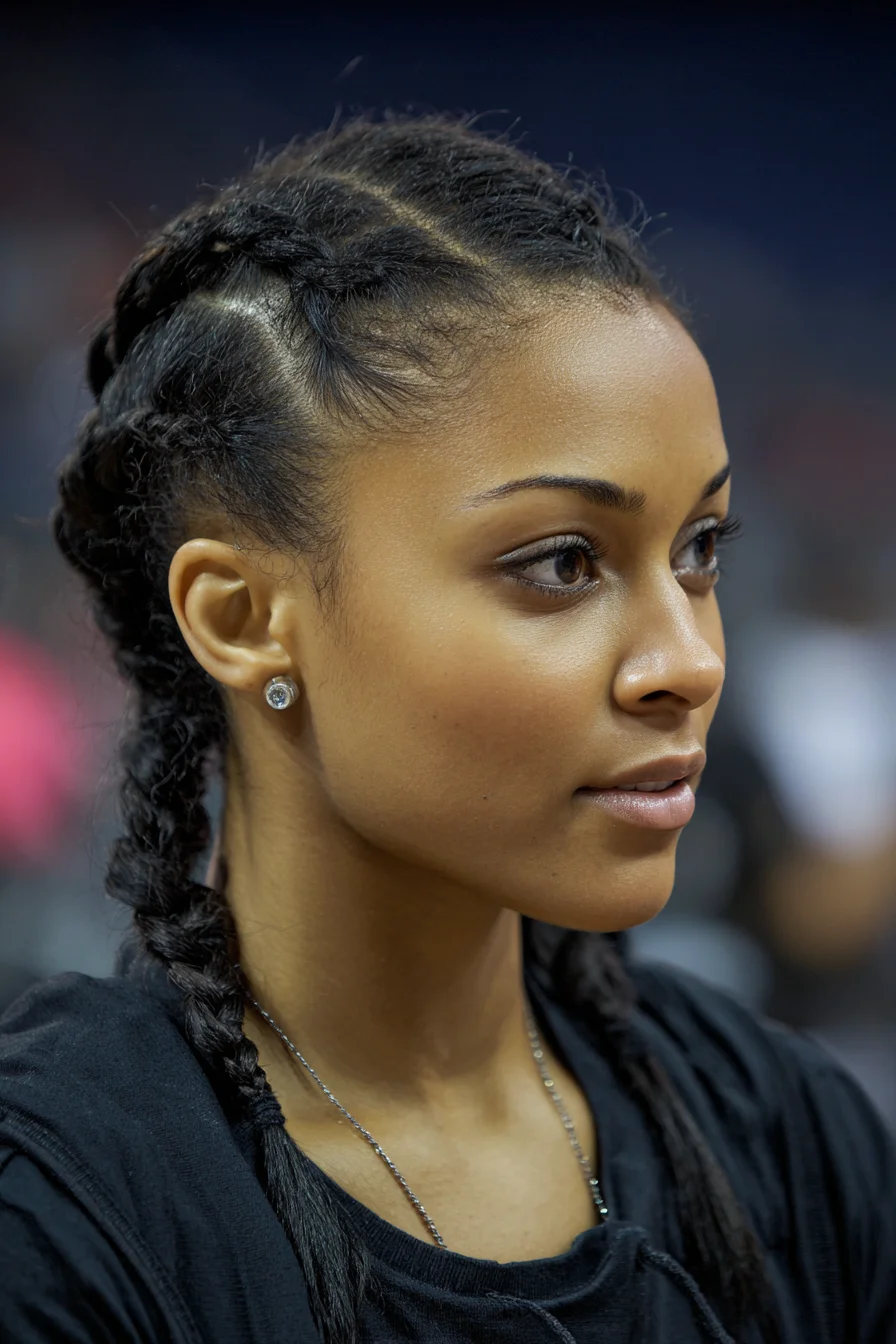
This sleek double Dutch braid is a versatile protective style that works best on medium to thick textured hair (curly, coily, or wavy). Straight hair will also hold the look if pre-texturized with a light mousse or salt spray. Technique: start with a clean, detangled part down the center; apply a leave-in and light gel for hold, then Dutch-braid each side (crossing sections under rather than over) adding hair as you move toward the nape. Tools needed: rat-tail comb for precise parting, sectioning clips, detangling brush, small elastics, and an edge brush. Products required: leave-in conditioner, a medium-hold gel or edge control, lightweight oil or serum for shine, and optional holding spray or mousse for longevity. Difficulty level: moderate — a stylist can complete it in 30–45 minutes, while beginners may need practice to keep even tension. Maintenance tips: sleep on a satin pillowcase or with a silk bonnet, lightly oil the scalp every few days, refresh edges with edge control, and avoid over-tightening to prevent breakage. Re-do or tighten after 2–3 weeks depending on new growth and frizz control.
Feed-In Cornrows Transitioning to Thick Boxer Braids
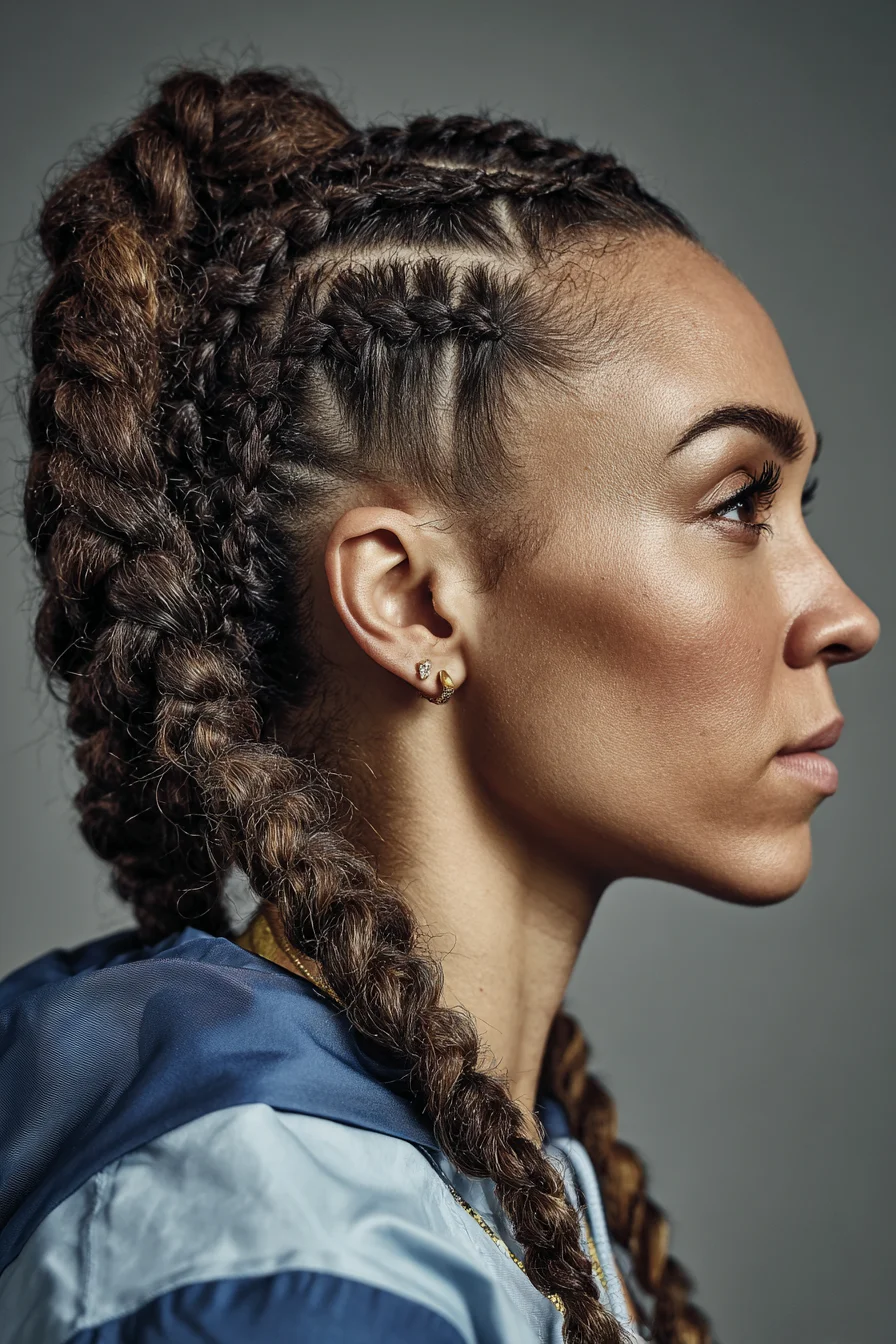
Salon-style feed-in cornrows that transition into thick, three-strand boxer braids — ideal for textured, curly, or coily hair and for straight hair with added grip or extensions. Technique: create clean partings, use a rat-tail comb to section, start small feed-in cornrows at the hairline, gradually add hair or synthetic extensions to build volume, then switch to three-strand braiding down the length and finish with elastic bands or sealed ends. Tools needed: rat-tail comb, sectioning clips, small elastics, edge brush, long-tail crochet or latch hook (for extensions), and scissors. Products: lightweight leave-in conditioner, firm-hold styling gel or braid cream for grip, edge control, nourishing oil or scalp serum, and a dry shampoo for in-between washes. Difficulty level: intermediate — expect 60–120 minutes depending on size and whether extensions are used; consider a professional for flawless parting and tension control. Maintenance tips: sleep on a silk/satin scarf, reapply lightweight oil to the scalp weekly, refresh edges with edge control, cleanse the scalp with diluted shampoo or dry shampoo, and redo within 4–8 weeks to avoid hair breakage.
Cornrow-to-Braided Bun Updo — Tight Cornrows with Textured Braided Bun
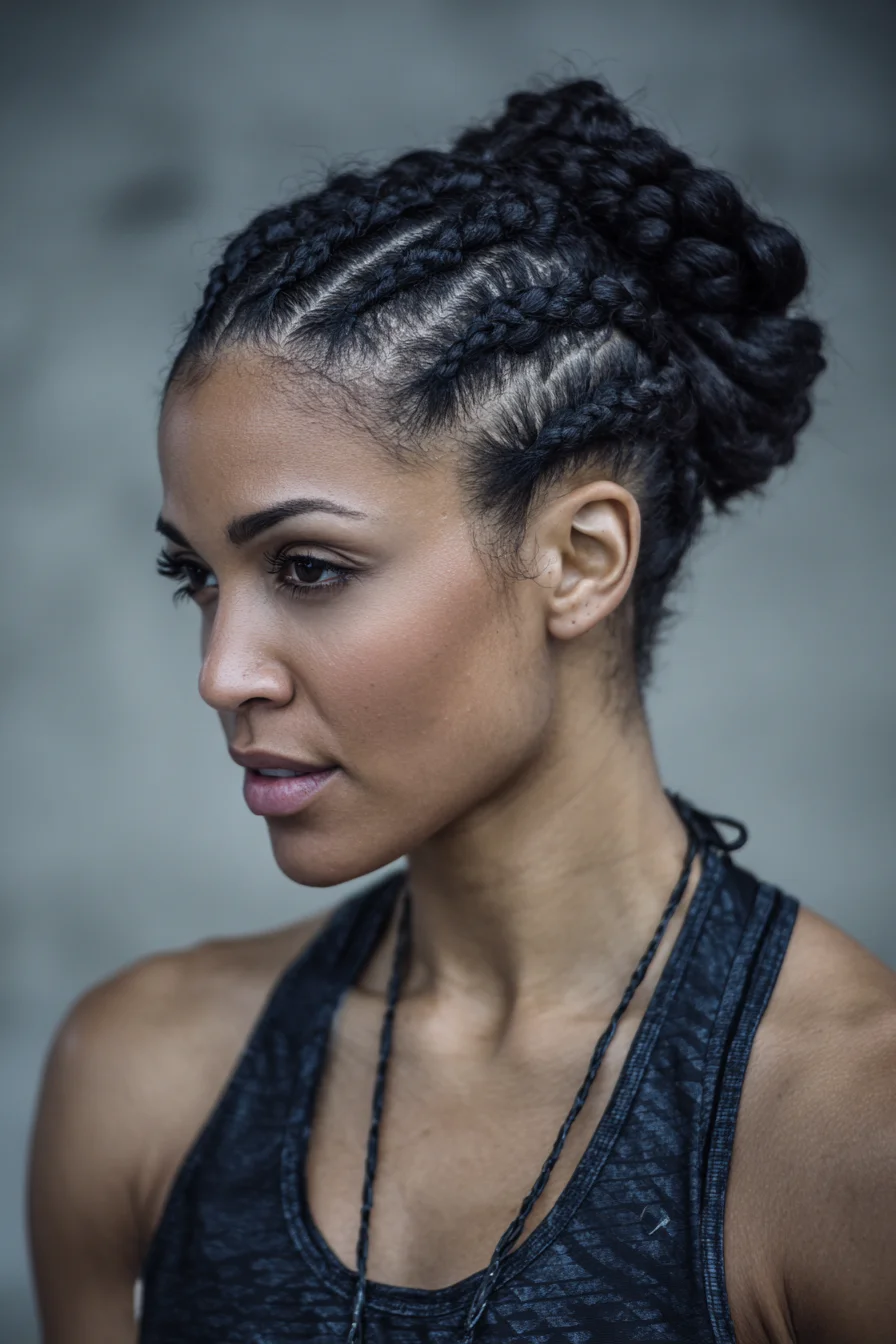
This sculpted cornrow-to-braided bun is ideal for textured, coily, or tightly curled hair (3A–4C) and works well with medium to thick density. The technique uses small-to-medium parallel cornrows on the sides and top that feed into a low or mid stacked braided bun for a clean, elevated finish. Tools: rat-tail comb for precise parting, sectioning clips, edge brush, elastic bands, bobby pins, and a mirror. Optional: extension hair if you need extra length or volume. Products: hydrating leave-in conditioner, lightweight styling cream for manageability, firm-hold gel or edge control for smooth edges, and a light oil or scalp serum to seal and add shine. Difficulty: intermediate — requires clean parting and even tension; recommended to book a stylist for first-time installs. Maintenance tips: sleep with a satin bonnet or scarf, lightly mist the scalp weekly with a water/leave-in mix, reapply a small amount of oil to the scalp to prevent dryness, and refresh edges with edge control as needed. Avoid keeping very tight styles beyond 4–6 weeks to reduce tension and risk of breakage.
Mohawk Dutch Cornrows into Long Textured Braids (Type 3–4)
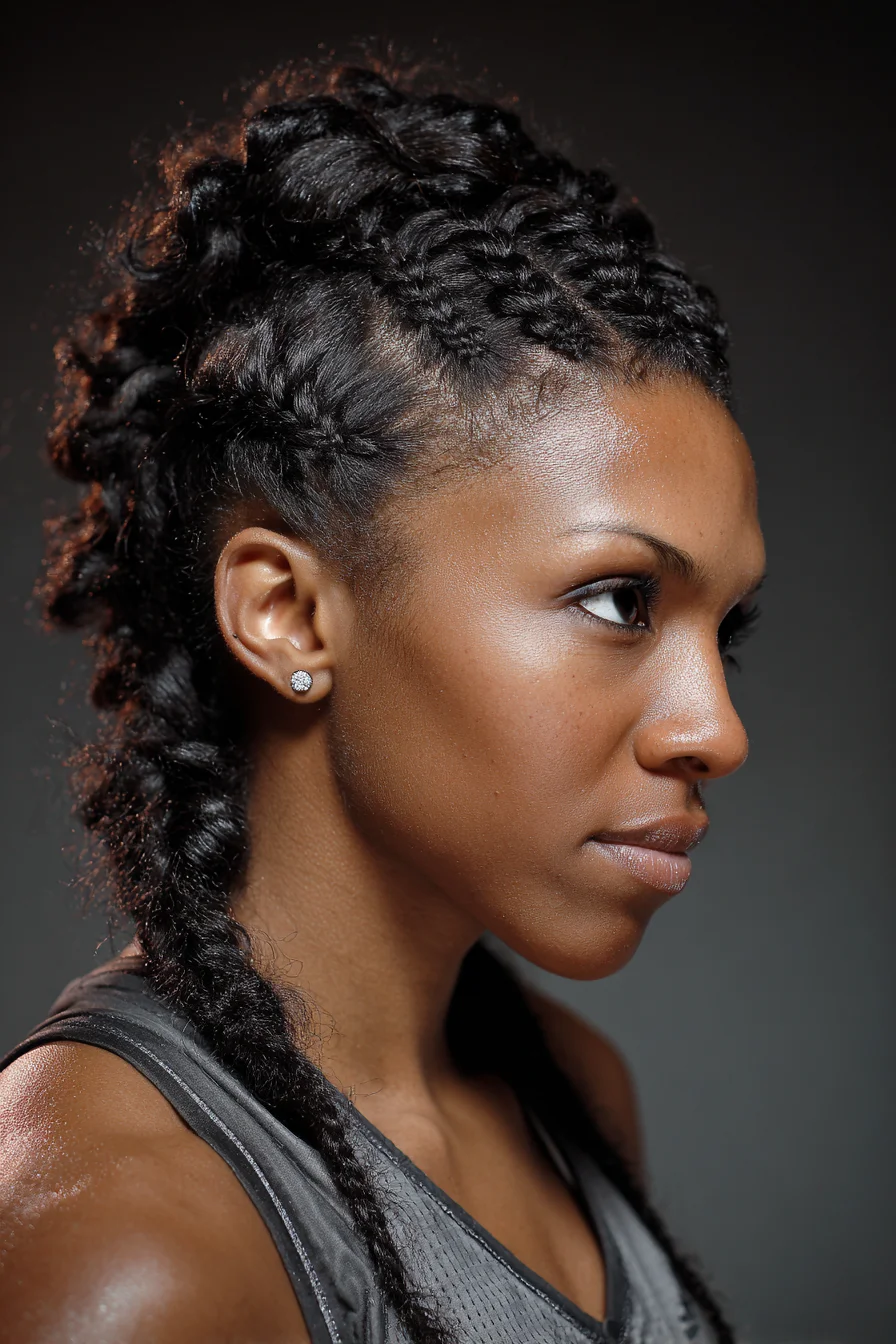
This polished mohawk-style look uses multiple Dutch cornrows along the sides that feed into a raised, textured center and finish as two long braids—ideal for natural, coily or curly textures (Type 3–4) and medium to thick density. Technique: start on dry, detangled hair; create clean parallel side parts with a rat-tail comb, then Dutch-braid or flat-twist each section toward the center, gently pancaking the braid loops to create volume. Gather the center panel into larger three-strand or two-strand braids down the back and secure with small elastics. Tools needed: rat-tail comb, sectioning clips, edge brush, small elastics, long rattail clips for tension control, and bobby pins. Products: leave-in conditioner, styling cream or butter for grip, medium-hold gel for edges, a lightweight oil for shine and scalp serum for moisture. Difficulty: intermediate — expect 45–90 minutes depending on section size and hair length. Maintenance tips: sleep with a satin bonnet or scarf, refresh edges with edge control, lightly reapply oil to the scalp weekly, and redo or tighten after 2–3 weeks to avoid breakage from prolonged tension.
Double Dutch Crown Braids into Low Braided Ponytail — Sporty Textured Updo

This look suits medium to long hair and works well on straight, wavy or slightly textured hair; very thick hair will give extra volume, while finer hair benefits from texturizing product or clip-in pieces. Technique: create a clean center part, then Dutch-braid along each hairline toward the nape, adding sections as you go to form two crown braids. Join the braid ends at the nape into a single low ponytail and finish with a three-strand braid. Lightly pancake the braids for width and pull a few face-framing pieces loose for softness. Tools needed: rat-tail comb, sectioning clips, small clear elastics, bobby pins, paddle brush and a tail comb. Products required: lightweight mousse or root-lift, salt or texturizing spray, anti-frizz serum for ends, and a flexible-hold hairspray; dry shampoo helps grip for braiding. Difficulty: intermediate — expect 20–35 minutes depending on hair length. Maintenance tips: sleep on a silk pillowcase or wrap with a silk scarf, refresh with dry shampoo at the roots, re-tighten elastics and pins as needed, and avoid heavy oils at the scalp to keep braids intact for 2–4 days.
Chunky Raised Cornrows into Two Long Braids with Defined Edges
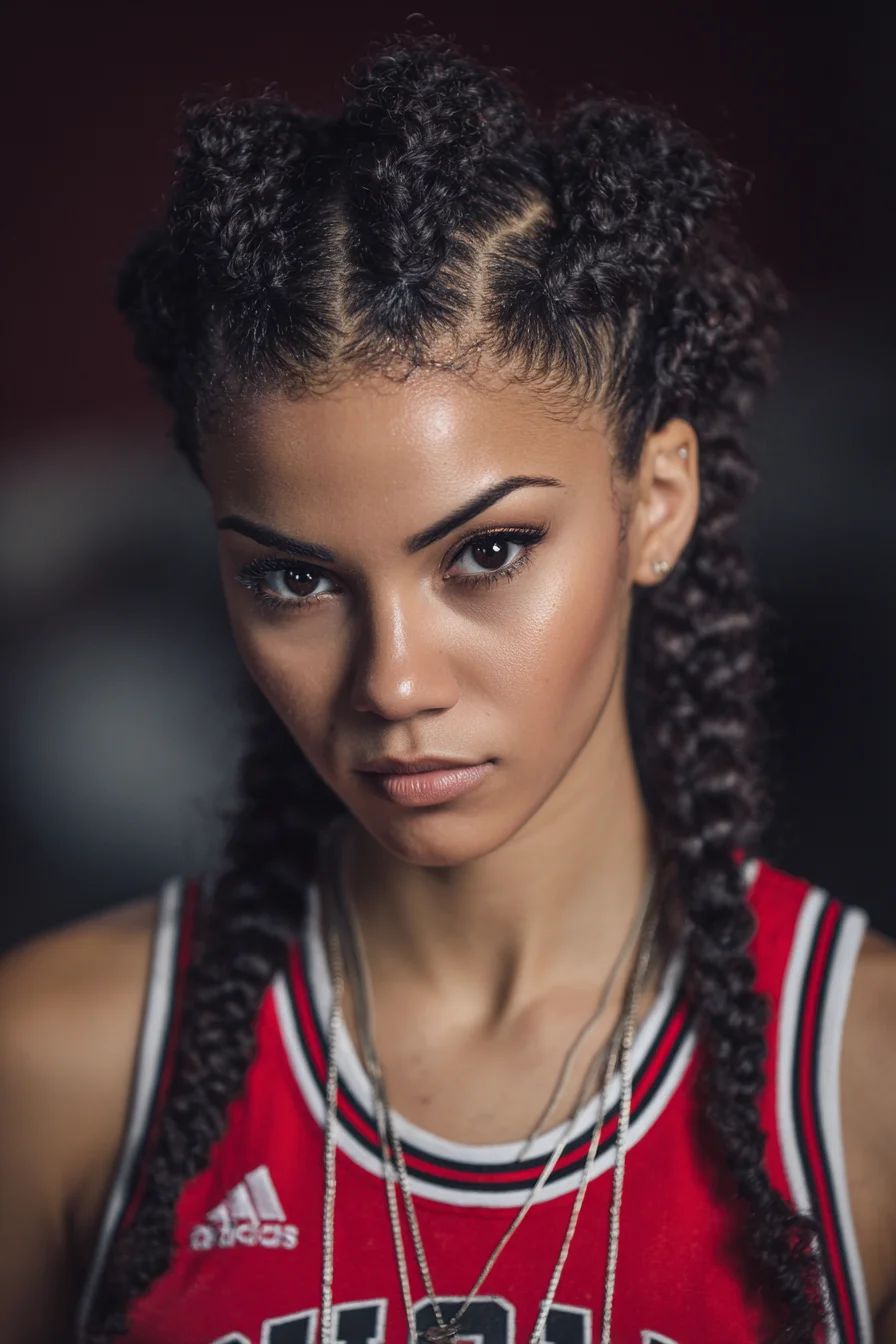
This style suits type 3 to 4 (curly/coily) hair best and can be adapted for straighter hair by adding texture with a curling cream or light texturizer. Technique: create clean center and side partings, then build three raised/cornrowed sections at the crown that transition into two larger, neatly tensioned braids down the back. Finish edges with a soft gel and an edge brush for a sleek hairline. Tools needed: rat-tail comb, sectioning clips, wide-tooth detangling brush, hair ties, edge brush, spray bottle, and fine-tooth comb for parting. Products required: leave-in conditioner or detangler, medium-hold styling gel or edge control, curl-defining cream, lightweight hair oil or scalp serum, and optional braid spray. Difficulty level: intermediate — expect 45–90 minutes depending on length and density; a practiced braider will get cleaner, tighter rows. Maintenance tips: sleep on a silk/satin scarf or bonnet, refresh edges with a small amount of gel, mist braids twice weekly with a moisturizing braid spray or diluted leave-in, avoid over-tightening to prevent breakage, and cleanse the scalp gently with diluted shampoo or co-wash every 2–3 weeks. Re-do or touch up after 4–6 weeks as needed.
Center-Part Cornrow Braids with Tapered Undercut — Sleek Boxer Braid Style
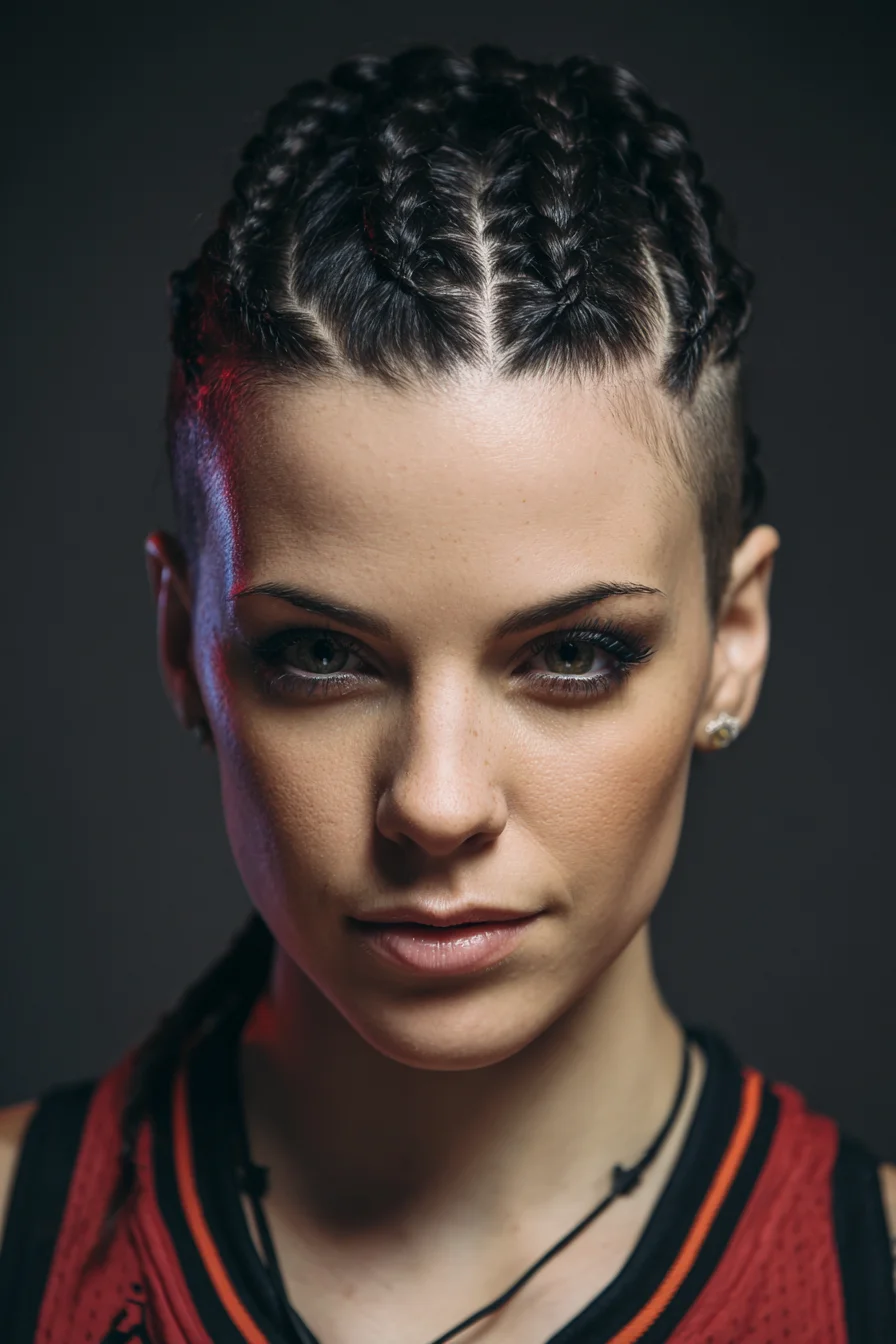
This look suits straight to wavy medium-to-thick hair and can be adapted with extensions for fine or very long hair. Start on clean, detangled hair: use a rat-tail comb to create precise center and parallel partings, clip sections, then apply a light leave-in detangler and a medium-hold styling gel or pomade to smooth flyaways. Use a three-strand Dutch (inside-out) braid technique, adding hair evenly as you work toward the nape to create tight, sculpted cornrows; secure ends with small elastic bands and, if desired, seal with a drop of lightweight oil. Tools: rat-tail comb, sectioning clips, fine-tooth comb, small elastics, edge brush, spray bottle, and a mirror (or a second mirror for at-home). Products: leave-in conditioner, braid spray or light hold gel, edge control, lightweight oil (argan or jojoba), and dry shampoo. Difficulty: intermediate — a steady hand and braiding experience help; consider a stylist for flawless symmetry. Maintenance: sleep on a silk scarf or pillowcase, refresh edges with edge control, mist scalp with braid spray or diluted leave-in weekly, wash gently without rough manipulation, and plan professional touch-ups every 2–4 weeks to avoid tension and preserve scalp health.
Sleek Double Dutch Braids — Tight Cornrow to Long Plaits
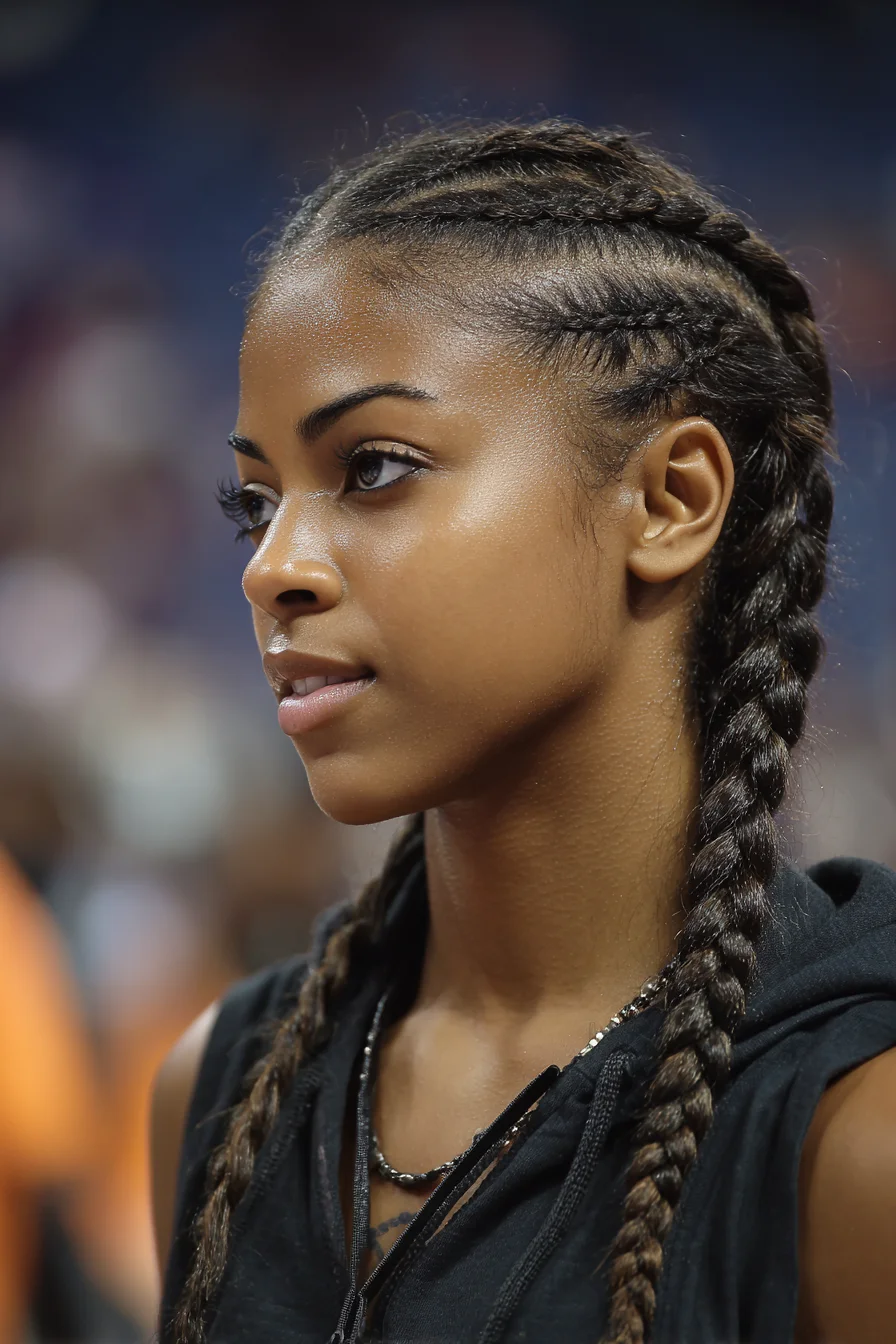
These sleek double Dutch braids (inverted cornrows) work best on medium to thick, textured or curly hair and can be adapted for fine hair with clip-in extensions. Start with a clean, detangled base and create a precise center part. Using a rat-tail comb and sectioning clips, begin each braid at the hairline: Dutch-braid by crossing outer strands underneath the center while adding small sections for a flat, tight pattern, then continue down to the nape and finish with a three-strand braid. Tools: rat-tail comb, sectioning clips, small clear elastics, edge brush, and optional extensions. Products: lightweight leave-in conditioner, holding gel or edge control for smooth edges, light oil for scalp hydration, and braid-refresh spray. Difficulty: moderate — requires consistent tension and neat parting; a stylist will execute the sharpest results quickly. Maintenance tips: sleep with a silk scarf or bonnet, apply braid spray or diluted leave-in weekly, gently cleanse the scalp with diluted shampoo or micellar water, and avoid over-tightening to reduce breakage and traction. Expect 2–6 weeks of wear depending on hair health; touch up edges as needed.
Curly Half-Up High Ponytail with Mini Cornrows and Sleek Edges
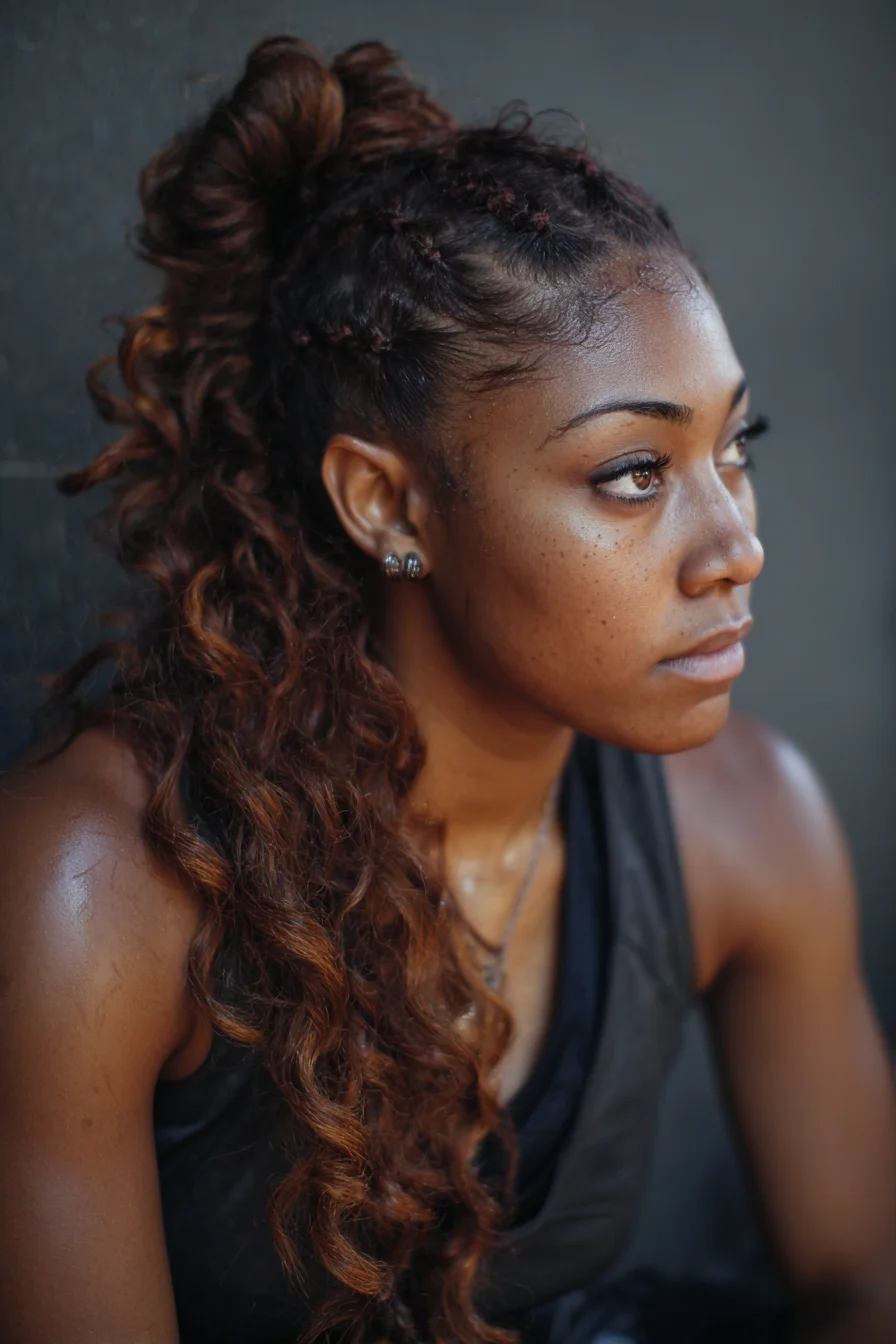
Suitability: Best for wavy to coily textures (2B–4A). Works well on medium to long lengths; fine hair can use lightweight clip-in extensions for volume, very thick hair may require stronger elastics. Styling technique: Section the top perimeter and create 3–6 small, neat cornrows back to the crown. Gather remaining hair and secure into a high half-up ponytail, then define the ponytail curls with a curling wand or by refreshing natural curl pattern with a diffuser. Smooth and shape baby hairs with an edge brush. Tools needed: rat-tail comb, small clear elastics, brush, edge brush or toothbrush, bobby pins, curling wand or diffuser, hair clips. Products required: leave-in conditioner, curling cream or mousse, medium-hold gel/edge control, heat protectant (if using heat), light finishing oil, and flexible-hold hairspray. Difficulty level: Moderate — basic cornrow skill and curl definition knowledge required. Maintenance tips: Sleep with a satin bonnet or scarf and pineapple the ponytail to protect curls; refresh with water + leave-in or curl refresher spray; reapply edge control as needed and redo cornrows every 2–4 weeks to keep the style tidy. Deep-condition weekly to prevent dryness.
Double Dutch Braids into Low Braided Bun — Sleek Sporty Updo
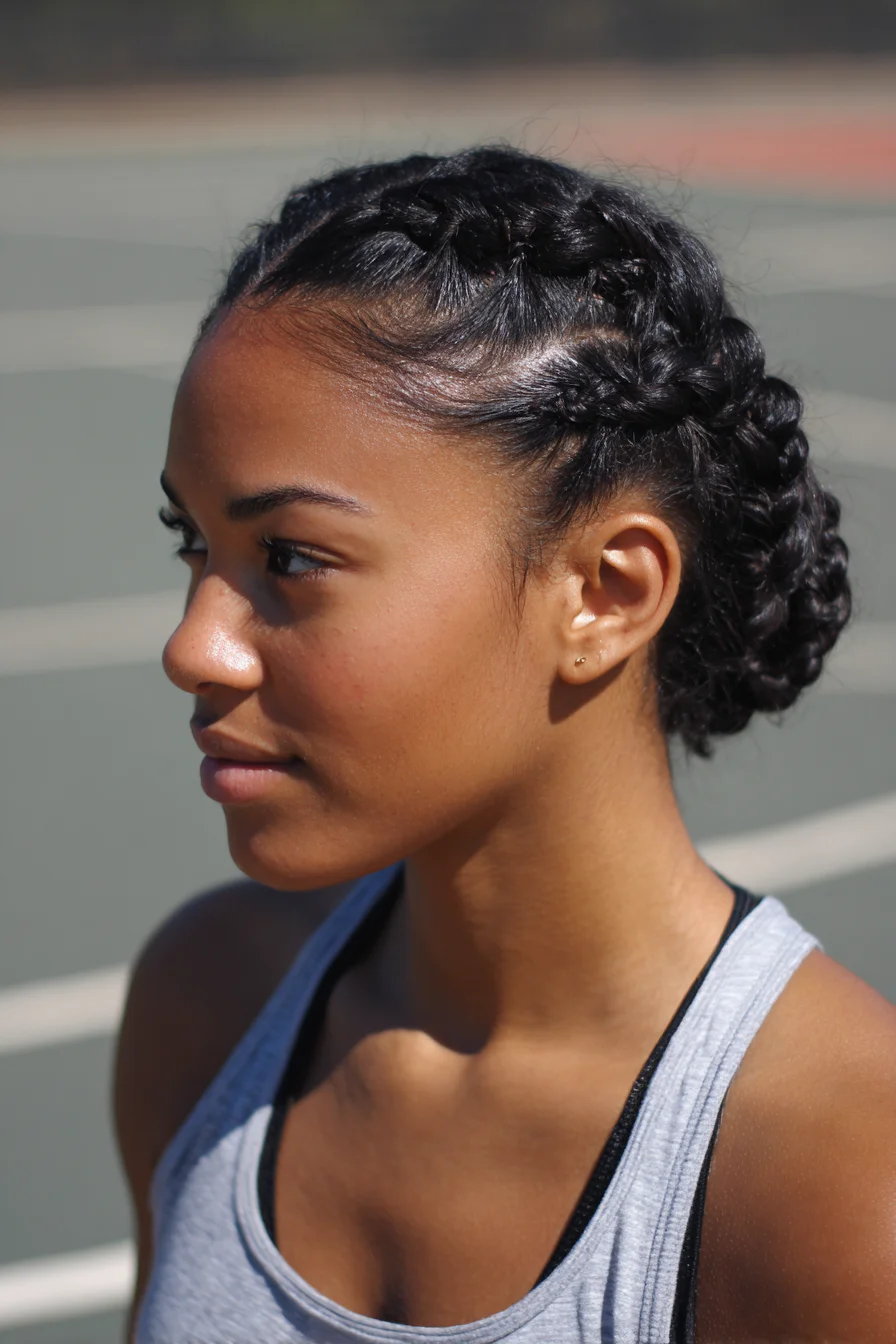
This sleek, sport-ready updo combines two Dutch (inverted) braids along the scalp that join into a low braided bun. It suits straight, wavy, curly and coily hair — medium to thick densities hold the shape best, and fine hair benefits from a texturizing spray for grip. Start on damp, detangled hair: apply a lightweight leave-in conditioner and a small amount of styling gel at the roots, section with a rat-tail comb, then create tight Dutch braids working toward the nape, adding hair evenly for clean lines. Secure braid ends with elastics, wrap into a low bun and pin with long bobby pins. Tools: rat-tail comb, sectioning clips, small elastics, bobby pins, edge brush. Products: leave-in conditioner, light styling gel or edge control, texturizing spray, lightweight oil or shine spray, flexible hairspray. Difficulty: intermediate — requires confident two-handed braiding and tension control; 25–45 minutes. Maintenance: sleep with a silk scarf or bonnet, refresh edges with minimal gel, re-pin loose areas, moisturize scalp between washes and avoid overtightening to prevent breakage.
As a stylist, my top advice is to balance security with hair health. Choose protective versions of the 28 basketball hairstyles that minimize tension — looser braids, cushioned elastics, and low-tension buns — and rotate styles so the same sections aren’t stressed daily. Pre- and post-workout care matters: detangle gently, refresh with a lightweight leave-in or oil, and rinse sweat from the scalp when you can to avoid buildup. Deep condition weekly, trim regularly to prevent split ends, and sleep on a satin pillowcase or bonnet to preserve styles. For high-drama or complex braided looks, book a pro so the style lasts and your edges stay healthy. Use sweat-wicking headbands or caps during play, and seal styles with a flexible gel or setting spray to reduce flyaways without stiffness. Try these 28 looks as inspiration — adapt them for your texture and routine, and don’t hesitate to consult a stylist for custom fitting and maintenance tips.